Last updated: April 10, 2026
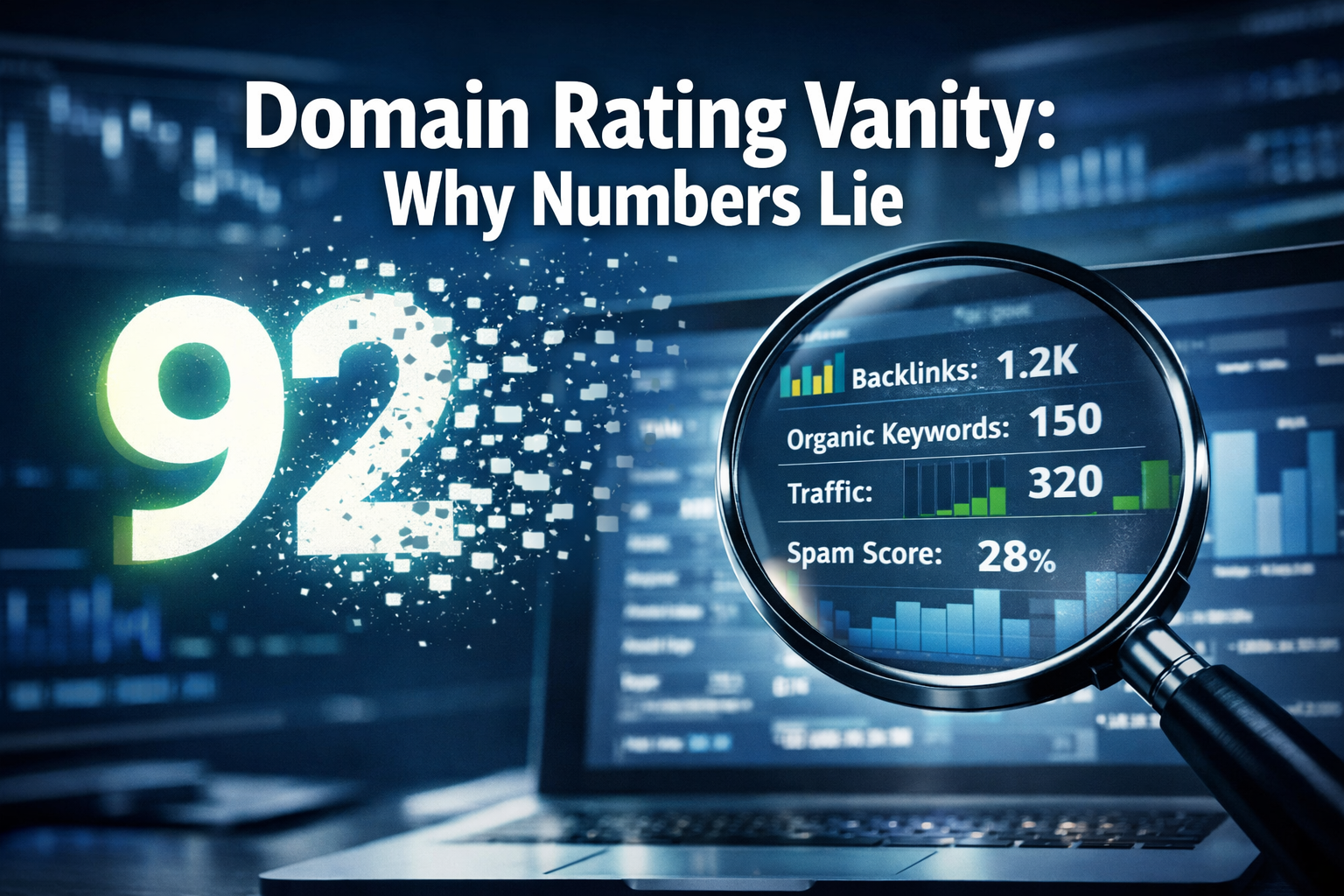
Quick Answer: Domain Rating (DR) vanity refers to the common but misleading practice of overly focusing on a website’s Domain Rating, an Ahrefs metric, as the sole or primary indicator of its SEO strength and authority, often overlooking crucial underlying factors that truly drive search performance and business value. While DR offers a quick snapshot, a high score alone doesn’t guarantee top rankings or relevant traffic, especially if it’s inflated by low-quality or irrelevant backlinks.
Key Takeaways:
- DR is a third-party metric: It’s an Ahrefs score, not a Google ranking factor.
- Vanity vs. Utility: Focusing only on DR leads to vanity metrics, not real growth.
- Backlink Quality Over Quantity: A few high-quality, relevant backlinks are far more valuable than many low-quality ones for boosting true authority.
- Context is Key: A DR of 50 for a niche site can be more impactful than a DR of 70 for a broad, unfocused site.
- Holistic SEO: Real SEO success depends on content quality, user experience, technical SEO, and targeted link building, not just DR.
- Avoid “DR Pumping”: Actively trying to inflate DR without genuine authority building can be detrimental.
- Measure What Matters: Track organic traffic, conversions, keyword rankings, and audience engagement for actual business impact.
- Competitive Analysis Tool: DR is best used as one tool among many for competitive analysis, not as a standalone goal.
What Exactly is Domain Rating Vanity?
Domain Rating vanity is the tendency to obsess over a website’s Domain Rating (DR) score, provided by Ahrefs, as the ultimate measure of its SEO prowess, often at the expense of genuine website health and performance. It’s like judging a book solely by its cover’s thickness without ever reading the content inside. Many website owners and marketers, seeing a higher DR as a direct path to success, chase this metric without understanding what it truly represents or how Google actually assesses authority. This misplaced focus can lead to ineffective SEO strategies and a false sense of achievement.
The core issue lies in mistaking a third-party metric for a direct Google ranking signal. While DR generally correlates with a site’s backlink profile strength (and thus, often with higher rankings), it’s a proprietary calculation by Ahrefs based on the number and quality of unique linking domains pointing to your website. It doesn’t directly measure content quality, user experience, site speed, or keyword relevance – all crucial factors for ranking on Google in 2026. A site might have a high DR, but if its content is poor or its target audience isn’t engaged, that high DR becomes a largely cosmetic number.
Why Do People Fall for Domain Rating Vanity?
People often fall for domain rating vanity because it offers a seemingly simple, quantifiable measure of a website’s strength, making it easy to track and compare. In a complex world like SEO, where many factors influence success, a single number like DR can be appealingly straightforward. Think of it as the allure of a shiny trophy; it looks impressive, even if the competition it was won in wasn’t the most challenging.
Here’s why this happens:
- Simplicity and Comparability: DR provides a single, easy-to-understand number (0-100) that allows for quick comparisons between websites. It’s much simpler than evaluating intricate backlink profiles, content quality, or technical SEO audits.
- Perceived Authority: A high DR often gives the impression of a powerful, authoritative site. Many SEO tools and agencies use DR as a benchmark, further cementing its perceived importance. This can be especially appealing for clients who aren’t deeply familiar with SEO nuances.
- Competitive Pressure: In a competitive market, seeing a competitor with a higher DR can create pressure to “catch up” or surpass them, leading to a focus on the number itself rather than the underlying strategies.
- Misunderstanding of Google’s Algorithm: Some believe DR is a direct reflection of Google’s own internal ranking signals, which isn’t the case. Google uses hundreds of signals, and while backlinks are a major one, its assessment of link quality and relevance is far more sophisticated than any single third-party metric can capture.
- The “Easy Button” Mentality: Some agencies or service providers promote “DR boosting” services, creating the illusion that simply increasing this number will lead to SEO success. While these services might indeed increase your DR, they often do so through tactics that don’t translate into real organic growth. For instance, services like increasing Ahrefs Domain Rating (DR 50) or increasing Ahrefs Domain Rating (DR 30) can be attractive for those looking for a quick numeric boost, but their real-world impact needs careful consideration.
A good analogy is a student who studies only to pass a specific test, rather than truly understanding the subject matter. They might get a good grade on that test, but lack the foundational knowledge for future success. Similarly, focusing solely on DR might make your site look good by one metric, but won’t build the robust authority needed for long-term SEO success.
How Can a High DR Be Misleading?
A high Domain Rating can be misleading if it doesn’t reflect the true quality, relevance, or organic search performance of a website. It’s possible for a site to have an impressive DR score yet still struggle with low organic traffic, poor keyword rankings, and minimal conversions. This often happens when the DR is inflated by irrelevant or low-quality backlinks that don’t genuinely pass “link equity” in Google’s eyes.
Consider these scenarios where a high DR might not mean true authority:
- Spammy or Irrelevant Backlinks: A site could have accumulated a large number of backlinks from low-quality directories, spam sites, or websites completely unrelated to its niche. While these might boost DR (because Ahrefs counts unique referring domains), Google’s algorithm is sophisticated enough to discount or even penalize such links. Learning about what are backlinks in SEO and understanding the difference between dofollow vs. nofollow backlinks can clarify why simply having many links isn’t enough.
- Legacy Links: An older domain might have a high DR due to a history of valuable links that are no longer active or relevant to its current content or purpose. If the site changed ownership or direction, those legacy links might still contribute to DR but not to current ranking performance.
- Focus on Broad, Low-Value Keywords: A site with a high DR might be ranking for extremely broad, low-competition keywords that bring in minimal qualified traffic. The DR doesn’t tell you the quality or intent of the traffic.
- Poor On-Page SEO and Technical Issues: Even with a strong backlink profile, if a site has critical technical SEO issues (like slow loading times, poor mobile responsiveness, or indexation problems) or lacks high-quality content optimized for user intent, it won’t rank well. The DR won’t reveal these underlying problems.
- Niche vs. General: A DR 60 for a very narrow, specialized niche site might signify extreme authority within that specific field, while a DR 70 for a general news site might be relatively average and less impactful for specific search terms. The context of the industry and niche significantly influences the meaning of a DR score.
- Lack of Freshness and Relevancy: Google values fresh, regularly updated content. A high DR won’t compensate for outdated or stale content that fails to meet current user needs.
An example could be a website that sells artisanal organic dog treats. If this site has a DR of 75, but most of its backlinks come from random tech blogs or gambling sites, those links are unlikely to help it rank for “best organic dog treats” on Google. Google wants to see links from other pet blogs, veterinary sites, or healthy food review sites – links that signal true relevance and expertise in the pet care niche.
What Are the Real Metrics for SEO Success Beyond DR?
For true SEO success, focusing on metrics that directly reflect organic search performance, user engagement, and business impact is essential, rather than fixating on a third-party score like Domain Rating. These “real” metrics provide a comprehensive picture of a website’s health and its ability to attract and convert its target audience.
Here are the key metrics to prioritize in 2026:
- Organic Traffic:
- What it is: The number of visitors coming to your site directly from search engine results pages (SERPs).
- Why it matters: This is the most fundamental indicator of whether your SEO efforts are successfully bringing people to your site. Look at trends over time, not just static numbers.
- Keyword Rankings:
- What it is: Your website’s position in search results for specific keywords.
- Why it matters: Tracking important keywords shows if your content is effective in getting discovered by your target audience. Focus on relevant, high-intent keywords.
- Search Visibility/Impression Share:
- What it is: How often your website appears in search results, regardless of whether someone clicks, and your share of impressions for specific keyword sets.
- Why it matters: Higher visibility means more opportunities for clicks and brand exposure.
- Click-Through Rate (CTR):
- What it is: The percentage of people who click on your listing in the SERPs after seeing it.
- Why it matters: A high CTR indicates your title tags and meta descriptions are compelling and relevant, making users want to learn more.
- Bounce Rate:
- What it is: The percentage of visitors who leave your site after viewing only one page.
- Why it matters: A high bounce rate can signal poor content quality, slow loading times, or a mismatch between search intent and landing page content.
- Time on Page/Session Duration:
- What it is: How long visitors spend actively engaging with your content.
- Why it matters: Longer times suggest users find your content valuable and engaging, which Google considers a positive user signal.
- Conversion Rate:
- What it is: The percentage of visitors who complete a desired action (e.g., make a purchase, fill out a form, subscribe to a newsletter).
- Why it matters: This is the ultimate business metric. It directly ties your SEO efforts to revenue or lead generation.
- Pages Per Session:
- What it is: The average number of pages a user visits during a single session.
- Why it matters: A higher number suggests good internal linking, engaging content, and a clear user journey, keeping visitors on your site longer.
- Backlink Profile Quality:
- What it is: The relevance, authority, and diversity of the websites linking to yours.
- Why it matters: While DR is an output, the quality of your backlink profile explained is a critical input. Focus on acquiring what is a high-authority backlink from reputable, industry-relevant sources. This is far more important than the raw number.
- Site Speed/Core Web Vitals:
- What it is: Metrics related to a page’s loading performance, interactivity, and visual stability.
- Why it matters: These are direct Google ranking factors and crucial for user experience. Slow sites lead to frustration and higher bounce rates.
By focusing on these actionable metrics, businesses can measure real progress and make informed decisions that genuinely improve their online presence and bottom line, moving beyond the superficiality of domain rating vanity.
Building Real Authority: Beyond Chasing a Number
Building real authority for your website means creating a genuinely valuable online presence that earns trust from both users and search engines, rather than simply inflating a third-party metric like Domain Rating. It’s about a holistic approach that prioritizes quality, relevance, and user experience.
Here’s a breakdown of how to achieve this:
1. Exceptional Content Creation ✍️
- Solve User Problems: Create content that directly answers questions, solves problems, or provides deep insights for your target audience.
- Depth and Comprehensiveness: Go beyond surface-level information. Aim to be the definitive resource for your chosen topics. For strategies around developing content that ranks, explore what is SEO content and how it integrates with your overall content marketing strategy for SEO.
- Originality and Expertise: Share unique perspectives, research, or experiences. Demonstrate genuine expertise in your niche.
- Diverse Formats: Use text, images, videos, infographics, and interactive elements to engage users.
- Regular Updates: Keep your content fresh and current. Outdated information hurts authority. Consider performing a content audit SEO to identify areas for improvement.
2. Strategic and Ethical Link Building 🔗
- Earned Links: Focus on creating such great content that other authoritative sites naturally want to link to it. This is the most powerful form of link building.
- Relationship Building: Network with other websites, influencers, and journalists in your industry. Guest posting on relevant, high-authority sites can be effective.
- Broken Link Building: Find broken links on reputable sites and offer your relevant content as a replacement.
- Resource Pages: Get your site listed on curated resource pages within your niche.
- Local Citations: For local businesses, ensure consistency across local citations SEO and directories.
- Avoid Black Hat Tactics: Steer clear of link schemes, private blog networks (PBNs), or buying low-quality links that can lead to penalties. Google’s algorithm is smart enough to detect and devalue these. Learn more about effective SEO link building services that focus on quality.
3. Superior User Experience (UX) 🚀
- Site Speed: Optimize images, code, and server response times to ensure fast loading pages.
- Mobile-Friendliness: Ensure your site is fully responsive and looks great on all devices. This is non-negotiable in 2026.
- Intuitive Navigation: Make it easy for users to find what they’re looking for with clear menus and internal linking.
- Readability: Use clear fonts, proper formatting, and sufficient white space.
- Accessibility: Design your site to be usable by everyone, including those with disabilities.
4. Robust Technical SEO 🛠️
- Crawlability and Indexability: Ensure search engine crawlers can easily access and understand your site’s content.
- Schema Markup: Implement structured data to help search engines better understand your content and display rich snippets.
- Security (HTTPS): Use an SSL certificate to protect user data and boost trust.
- No Broken Links or Redirect Errors: Regularly check for and fix 404 errors or improper redirects, as discussed in managing 404 redirect SEO.
- XML Sitemaps and Robots.txt: Use these files effectively to guide search engines.
5. Audience Engagement and Brand Building ❤️
- Social Media Presence: Engage with your audience on relevant platforms to build community and drive traffic.
- Email Marketing: Cultivate a subscriber list to foster loyalty and direct traffic.
- Brand Mentions: Encourage people to talk about your brand, even if they don’t link directly to your site. Google understands brand mentions as a sign of authority.
- Customer Reviews and Testimonials: Positive reviews build trust and can influence local SEO.
By committing to these pillars, you create a website that not only pleases search engines but, more importantly, genuinely serves and delights your audience. This authentic authority will naturally lead to higher organic rankings, increased traffic, and improved business outcomes, far outlasting any temporary boost from domain rating vanity tactics.
The Pitfalls of “DR Pumping” and Low-Quality Link Building
“DR pumping” refers to the deliberate, often manipulative, act of artificially inflating a website’s Domain Rating (DR) score through aggressive acquisition of numerous, typically low-quality, backlinks. This strategy is a prime example of domain rating vanity, as it prioritizes a numerical increase over genuine SEO value and can lead to severe long-term consequences.
Here’s why chasing a high DR through such tactics is a dangerous game:
- Google Penalties: Search engines, particularly Google, are highly sophisticated in detecting manipulative link schemes. If your site is found to be engaging in low-quality link building or buying links that violate Google’s Webmaster Guidelines, it can incur manual or algorithmic penalties. These penalties can range from de-ranking specific pages to complete de-indexation of your entire site, effectively wiping you off search results.
- Wasted Resources: The time, effort, and money spent acquiring these “vanity links” are largely wasted. These links often come from irrelevant sites, link farms, or automated tools that provide no real link equity or referral traffic. Instead of investing in quality content or legitimate outreach, resources are poured into a metric that doesn’t drive business goals.
- Damage to Brand Reputation: Associating your website with spammy or low-quality sites can damage your brand’s credibility and trustworthiness in the eyes of users and other legitimate websites. Future link building efforts with reputable sources might become harder if your site has a tainted backlink profile.
- Inflated Expectations: A high DR achieved through pumping can create a false sense of security and lead to unrealistic expectations about organic traffic and rankings. When these expectations aren’t met, it can lead to frustration and confusion about why SEO “isn’t working,” despite a high DR.
- Difficult Recovery: Recovering from a Google penalty, especially one related to unnatural links, can be a long, arduous, and expensive process involving extensive backlink audits and disavowals. Prevention is always better than cure.
- No Real Business Value: Ultimately, low-quality links and an artificially inflated DR don’t contribute to the metrics that truly matter: organic traffic, conversions, leads, or sales. They are merely superficial indicators that distract from genuine growth strategies.
Case in Point: The “Guest Post Farm”
Imagine a new e-commerce site focused on sustainable fashion. Instead of creating amazing content about ethical sourcing and unique styles, the site owner pays for hundreds of “guest posts” on obscure blogs about unrelated topics like “tech gadgets” or “home gardening.” These articles are thin, often AI-generated, and primarily exist to insert a link back to the fashion site. Ahrefs might see many new referring domains and boost the DR.
However, Google sees these links from irrelevant, low-quality sources. It understands that a tech blog linking to a sustainable fashion site is likely manipulative, or at best, provides no real endorsement. The fashion site might get a higher DR, but its rankings for “sustainable dresses” or “eco-friendly activewear” remain stagnant or even drop if a penalty is issued. This is the classic trap of domain rating vanity.
Instead of “DR pumping,” focus on genuine how backlinks improve domain authority through quality link acquisition, which supports real, sustainable growth.
Navigating the Competitive Landscape with a Balanced View of DR
Navigating the competitive landscape effectively requires a balanced view of Domain Rating (DR), using it as one informative data point among many, rather than a definitive statement of a competitor’s overall SEO strength. While a high DR might indicate a strong backlink profile, digging deeper into why that DR is high and how it impacts their performance is crucial for developing your own winning strategy in 2026.
Here’s how to use DR smartly in competitive analysis:
- DR as an Initial Filter: Use DR as a quick way to identify key competitors or potential link-building targets. If a competitor has a significantly higher DR, it suggests they likely have a robust backlink profile worth investigating.
- Analyze Their Backlink Profile: Don’t just look at the DR number. Dive into where their links are coming from.
- Relevance: Are their powerful links from sites within your niche or related industries?
- Quality: Are these high-authority, trustworthy sites, or spammy ones?
- Anchor Text: What anchor text are they using? Is it natural or overly optimized?
- Diversity: Do they have a diverse range of referring domains, or are many links from a few sources?
- Link Growth: How quickly are they acquiring new links? Is it natural or aggressive? Examining backlink examples in SEO can provide practical insights.
- Compare DR with Other Metrics: Always put DR in context with their organic traffic, keyword rankings, content quality, and site structure. A competitor with a DR of 70 but declining organic traffic and poor content might be vulnerable, whereas a DR 40 site with rapidly increasing relevant traffic and amazing content could be a rising threat.
- Identify Link Gaps: Use tools to find out which authoritative sites link to your competitors but not to you. This reveals potential link-building opportunities. For a practical approach to building strong links, consider exploring options for backlinks for site through reputable services.
- Understand Niche Context: In a very niche market, a DR of 30-40 might be considered highly authoritative, while in a broad, highly competitive market, a DR of 60 might be just average. Adjust your expectations and analysis based on your industry.
- Benchmark, Don’t Obsess: Use competitor DRs as a benchmark to understand the typical authority levels in your space, but don’t obsess over matching or exceeding a specific number. Focus on outperforming them on critical business metrics.
Example Scenario: SaaS Competitor Analysis
Let’s say you run a new SaaS company offering project management software. Your main competitor has a DR of 80. Instead of panicking and trying to “buy” links to match their DR, you analyze their profile.
You discover:
- Many of their high-DR links come from reputable tech review sites and industry blogs.
- They also have extensive media coverage and mentions in Forbes and TechCrunch.
- Their content strategy involves in-depth guides and case studies.
Your conclusion: Their high DR isn’t vanity; it’s a reflection of genuine authority built through excellent content and strong PR. Your strategy should then focus on:
- Creating equally compelling content.
- Targeting similar tech review sites for coverage.
- Building relationships with industry journalists.
- Focusing on acquiring what is a high-authority backlink organically.
By taking this balanced approach, you move beyond domain rating vanity and build an SEO strategy that truly helps you compete and win.
Conclusion: Mastering True SEO Authority in 2026
In 2026, understanding and moving beyond the allure of domain rating vanity is crucial for anyone serious about sustainable SEO success. While Domain Rating (DR) serves as a quick, third-party indicator of a website’s backlink profile strength, it is by no means the sole or ultimate measure of authority or ranking potential. An inflated DR, built on low-quality or irrelevant links, creates a false sense of achievement and can even invite penalties from search engines. True authority is a holistic construct, built on a foundation of exceptional content, a genuinely earned and relevant backlink profile, a superior user experience, and robust technical SEO.
To truly thrive in the competitive digital landscape, shift your focus from merely chasing a number to cultivating a website that Google truly values: one that consistently provides valuable answers, delivers an excellent user experience, and naturally attracts high-quality endorsements from other reputable sites. Measure what truly matters: organic traffic, keyword rankings for relevant terms, user engagement metrics like time on page and bounce rate, and ultimately, conversions that drive your business goals. By prioritizing these tangible outcomes over superficial metrics, you will not only achieve higher rankings but also build a resilient, authoritative online presence that stands the test of time and algorithm updates.
Actionable Next Steps:
- Audit Your Backlink Profile: Regularly review your backlinks for quality and relevance. Disavow any low-quality or spammy links that could be inflating your DR artificially without providing real value.
- Double Down on Content Quality: Invest in creating comprehensive, expert, and engaging content that genuinely helps your audience and establishes your site as a go-to resource in your niche.
- Prioritize User Experience: Ensure your site is fast, mobile-friendly, easy to navigate, and provides an excellent experience for all visitors.
- Pursue Ethical Link Building: Focus on earning high-quality, relevant backlinks through genuine outreach, content promotion, and relationship building. Avoid any “DR pumping” services.
- Monitor Comprehensive Metrics: Track a broad range of SEO and business metrics beyond DR, including organic traffic, keyword performance, conversion rates, and user engagement, to get a true picture of your SEO health.
By adopting this comprehensive and authentic approach, you will build true SEO authority that delivers lasting results, making domain rating vanity a thing of the past for your strategy.
Domain Authority Reality Check 🤔
This tool helps you evaluate your website’s true authority beyond just its Domain Rating (DR). Input your stats to get a more holistic assessment.
Fill in the details above and click ‘Calculate’ to see your true authority score.