Last updated: February 27, 2026
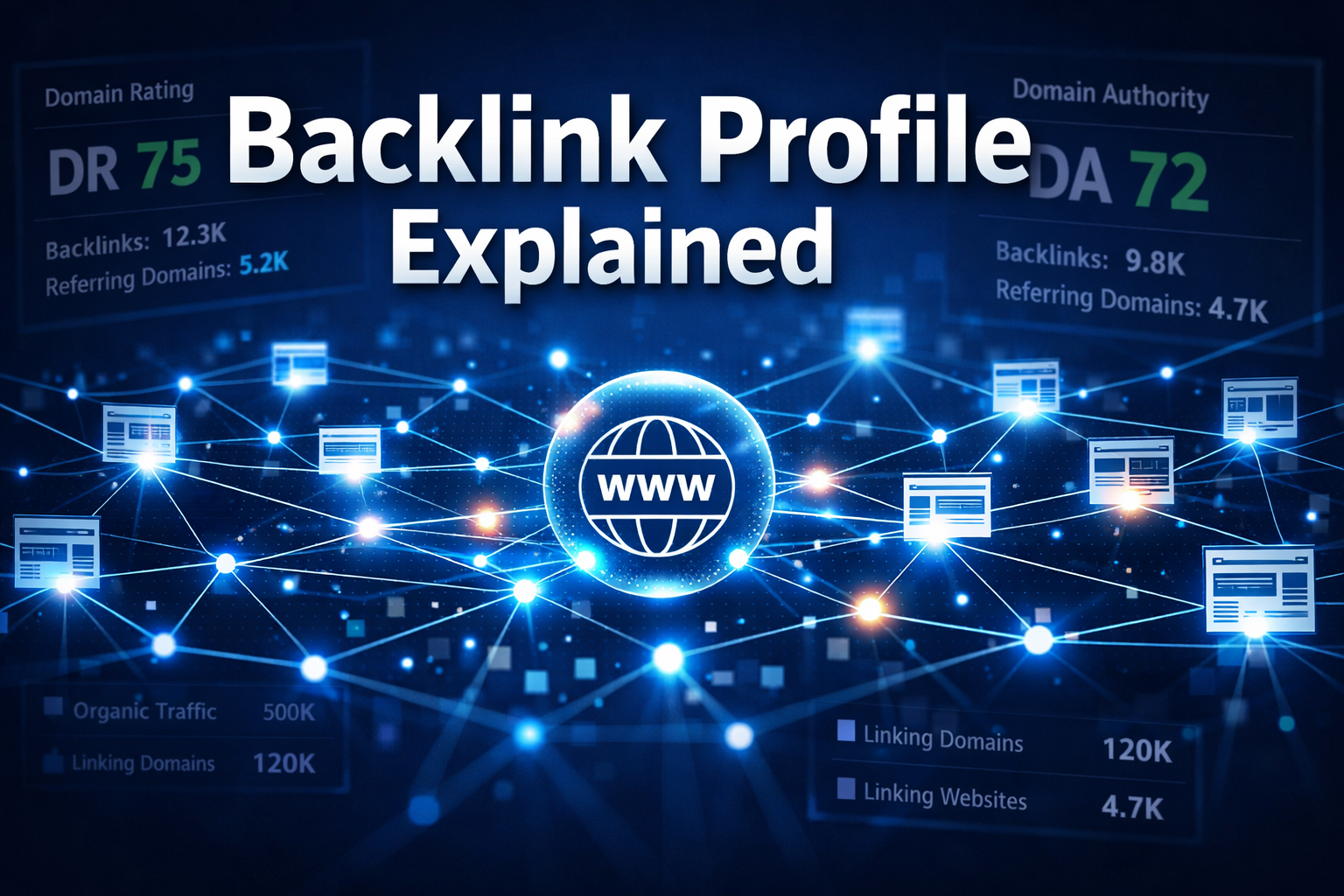
Your backlink profile reveals how other websites view your content and directly shapes how search engines judge your site’s credibility. Understanding what a backlink profile is and how to analyze it can mean the difference between ranking on page one or languishing in obscurity. This comprehensive guide breaks down everything about backlink profiles explained in clear, actionable terms.
Key Takeaways
- A backlink profile is the complete collection of all external links pointing to your website, including their sources, quality, and characteristics
- Quality matters far more than quantity—one high-authority link can outperform dozens of low-quality links
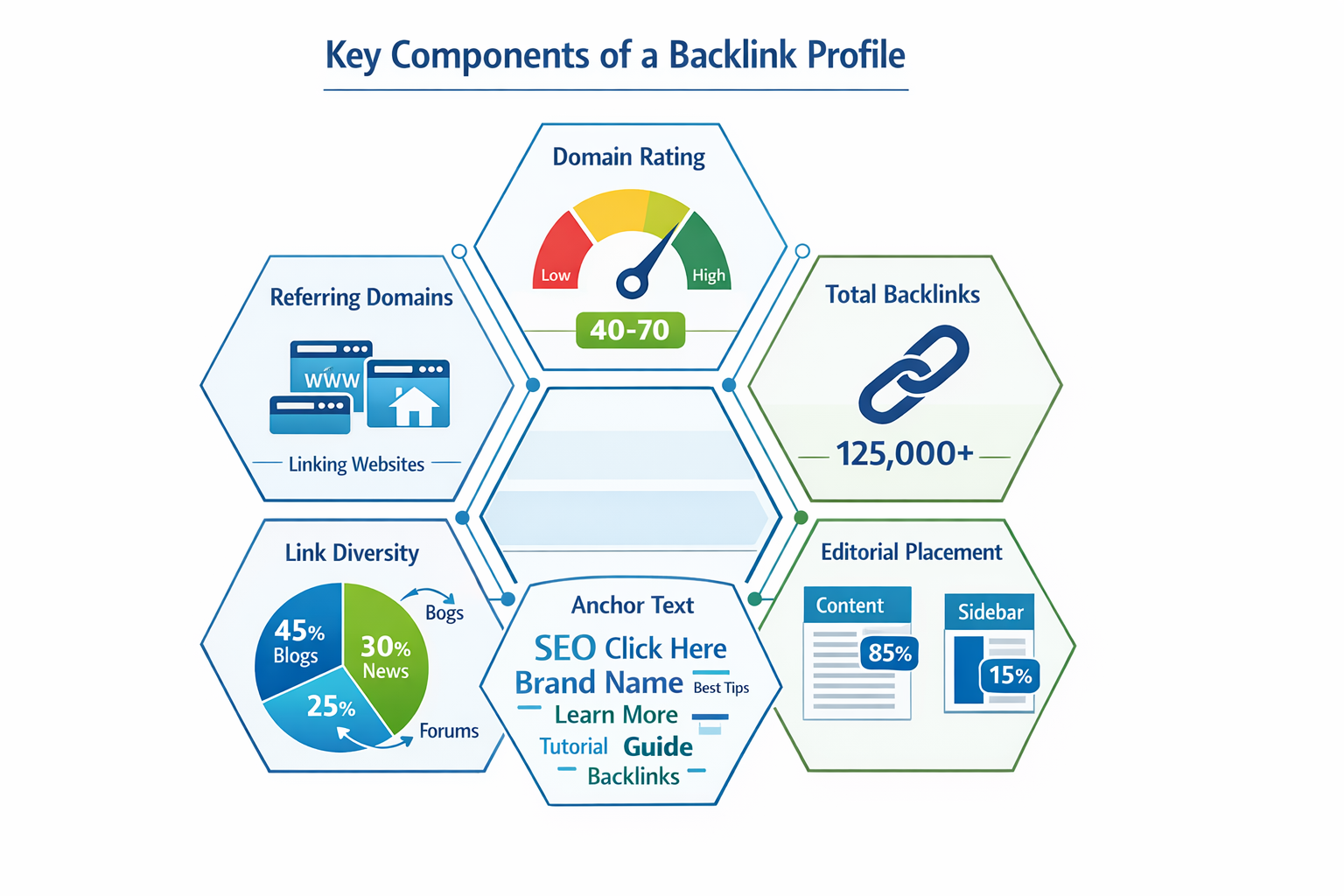
- Six core components define a healthy profile: referring domains, domain authority metrics, total backlinks, link diversity, anchor text variety, and editorial placement
- Regular analysis using tools like Ahrefs, SEMrush, or Google Search Console helps identify opportunities and toxic links
- Natural profiles built gradually over time withstand algorithm updates better than artificially inflated link schemes
- Diverse anchor text and varied link sources create a natural pattern that search engines reward
- Competitive gap analysis reveals valuable linking opportunities you’re missing
Quick Answer
A backlink profile is the complete collection of all external links pointing to your website, analyzed by their quality, source authority, anchor text, and placement. Search engines use your backlink profile as a primary ranking signal, treating links as votes of confidence from other sites. A strong profile features diverse, high-authority links from relevant sources, balanced anchor text, and natural growth patterns that signal genuine editorial endorsement rather than manipulation.
What Is a Backlink Profile and Why Does It Matter?
A backlink profile represents the total ecosystem of external links pointing to your website from other domains across the internet. This profile includes every link’s source domain, authority level, anchor text, placement context, and follow status—creating a comprehensive picture of how the web connects to your site.
Search engines evaluate backlink profiles to determine your site’s trustworthiness, authority, and relevance for specific topics. Sites with strong backlink profiles rank faster, recover more easily from algorithm changes, and compete more effectively against larger brands.[2] Despite the rise of AI-generated content and frequent algorithm updates in 2026, backlinks remain foundational to search rankings.[2]
Key elements that make backlink profiles critical:
- Authority transfer: Links from high-authority sites pass credibility to your domain
- Topical relevance: Links from industry-related sites signal your expertise in specific subjects
- Discovery pathway: Search engine crawlers find new pages by following backlinks
- Competitive advantage: Strong profiles help smaller sites compete against established competitors
- Long-term stability: Quality links persist over time, creating compounding authority[4]
The quality of your backlink profile matters more than raw numbers. One link from a respected industry publication can deliver more ranking power than hundreds of directory submissions or forum signatures. This is why understanding how Google evaluates backlinks is essential for building an effective SEO strategy.
What Are the Six Core Components of a Healthy Backlink Profile?
A comprehensive backlink profile analysis examines six fundamental components that together determine your site’s link authority and search engine performance.
1. Referring Domains
Referring domains are unique websites that link to your site. Ten links from ten different domains carry significantly more weight than ten links from a single domain. Search engines value diversity because it indicates broader recognition across the web community.
2. Domain Rating and Authority Metrics
Domain Rating (DR) from Ahrefs and Domain Authority (DA) from Moz measure a website’s overall link strength on a 0-100 scale. Pages with higher Domain Ratings tend to perform better in search rankings.[1] Links from DR/DA 40+ sites typically provide meaningful ranking benefits.
3. Total Backlink Count
While less important than referring domains, total backlink count shows the cumulative link equity pointing to your site. This metric helps track growth trends and identify which content attracts the most links.
4. Link Diversity Across Sources
A diverse backlink profile spans multiple source types including blogs, news sites, educational institutions, industry publications, and forums. This diversity boosts credibility and helps maintain a natural profile that avoids algorithmic penalties.[1] Understanding different types of backlinks in SEO helps you build this diversity strategically.
5. Anchor Text Variety
Effective profiles use a natural mix of exact-match keywords, partial-match phrases, branded terms, and generic text like “click here.” Over-optimizing with repetitive keywords can trigger penalties, while balanced diversity improves relevance without raising red flags.[2]
6. Editorial Link Placement
Links embedded within relevant content paragraphs signal genuine editorial endorsement, while footer or sidebar links suggest paid placement and carry minimal value.[3] Contextual backlinks placed naturally within content provide the strongest ranking signals.
How Do You Analyze Your Backlink Profile Effectively?
Analyzing your backlink profile requires systematic data collection and strategic evaluation to identify strengths, weaknesses, and opportunities for improvement.
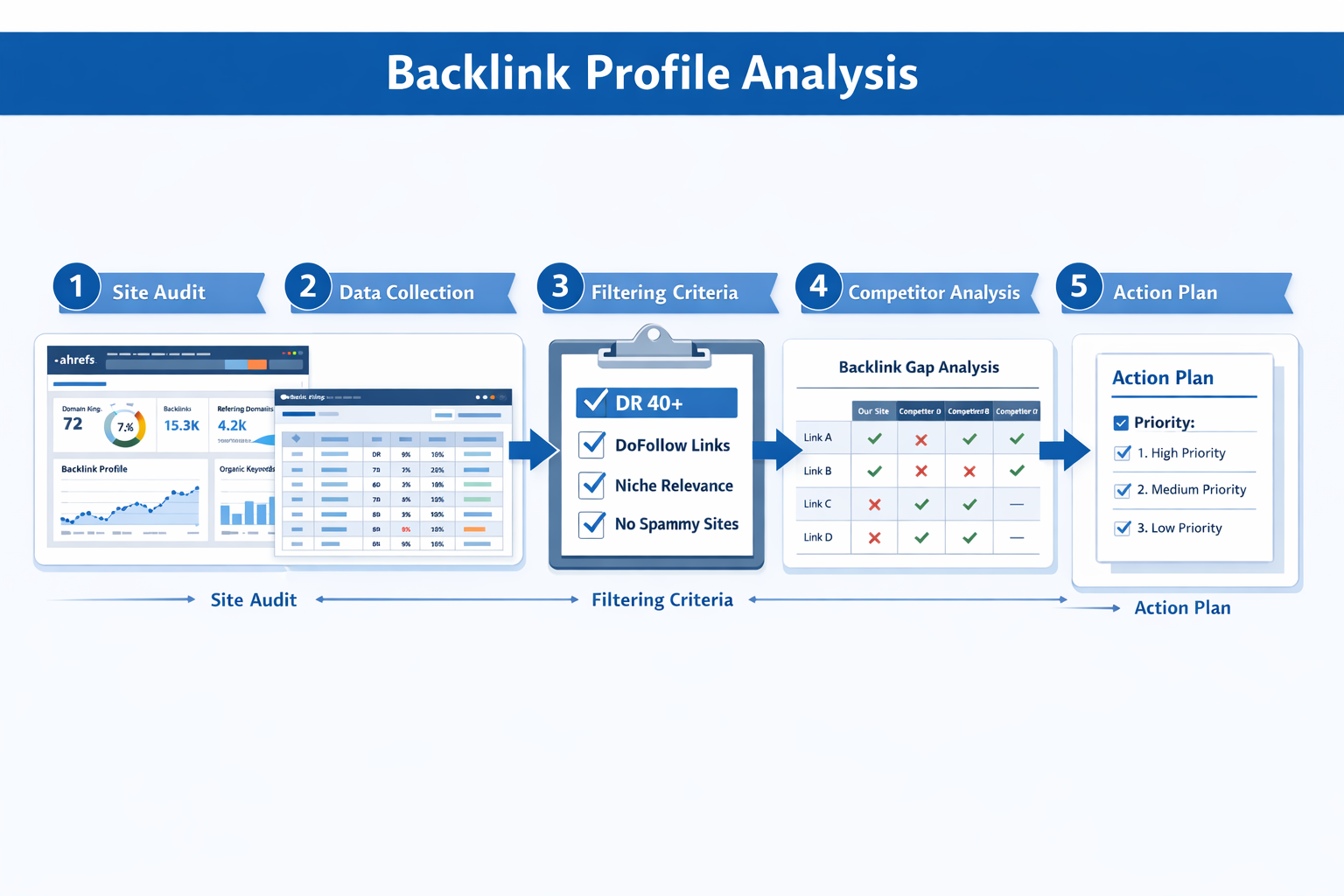
Step 1: Choose Your Analysis Tools
Use professional SEO tools to gather comprehensive backlink data:
- Ahrefs: Industry-leading backlink index with detailed metrics
- SEMrush: Comprehensive competitor analysis and link tracking
- Moz Link Explorer: Domain Authority metrics and spam score analysis
- Google Search Console: Free data directly from Google showing your indexed backlinks
Each tool offers unique insights, so using multiple platforms provides the most complete picture.[1]
Step 2: Collect Core Metrics
Gather these essential data points:
- Total referring domains and backlinks
- Domain Rating/Authority distribution of linking sites
- Anchor text distribution across all links
- Link type breakdown (dofollow vs. nofollow)
- Top linked pages on your site
- New and lost links over time
Understanding the difference between dofollow vs nofollow backlinks helps you prioritize which links deliver the most SEO value.
Step 3: Identify Quality Indicators
Evaluate each linking domain for:
- Authority level: DR/DA score above 30 (40+ preferred)
- Topical relevance: Industry alignment with your niche
- Traffic potential: Whether the link could drive actual visitors
- Link placement: Content-embedded vs. sidebar/footer
- Site quality: Professional design, regular updates, legitimate content
Step 4: Flag Toxic Links
Identify potentially harmful links that could trigger penalties:
- Links from spam directories or link farms
- Sites with duplicate or scraped content
- Domains with suspicious traffic patterns
- Links with over-optimized anchor text
- Networks of interconnected low-quality sites
Common mistake to avoid: Don’t panic over a few low-quality links. Google expects natural profiles to include some lower-quality sources. Only disavow links if you have a manual penalty or an overwhelming proportion of spam links.
What Makes a Backlink Profile Natural vs. Manipulative?
Search engines have become sophisticated at distinguishing between naturally earned links and artificially manipulated profiles. Understanding these differences helps you build sustainable link authority.
Natural Backlink Profile Characteristics:
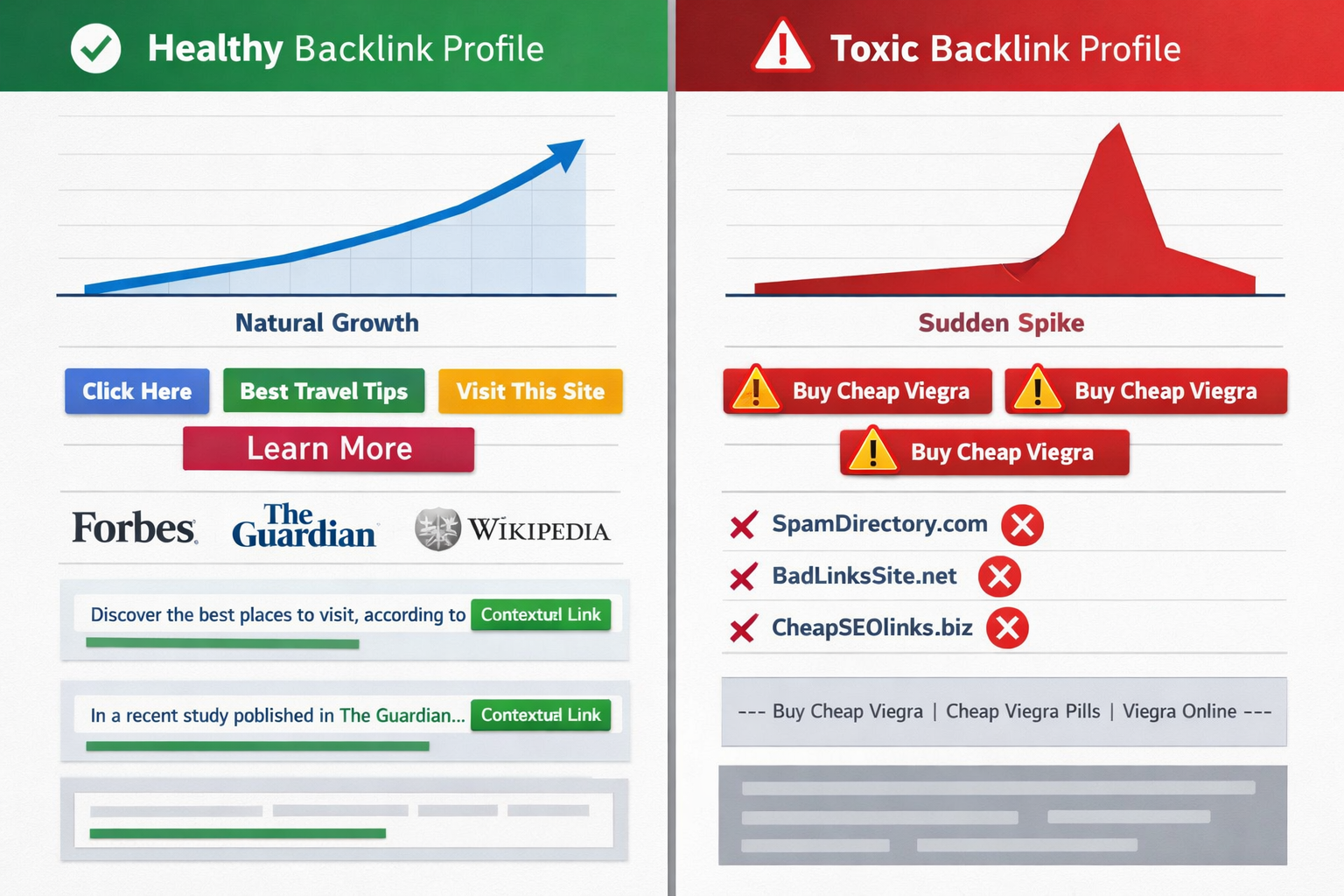
- Gradual growth: Links accumulate steadily over months and years rather than appearing in sudden bursts
- Varied anchor text: Mix of branded terms (your company name), generic phrases (“click here”), partial matches, and occasional exact-match keywords
- Diverse sources: Links from multiple industries, content types, and domain authority levels
- Editorial context: Links appear within relevant content that provides genuine value to readers
- Organic discovery: People find and link to your content because it’s genuinely useful, not because you asked
The most sustainable approach involves publishing content people genuinely want to cite—comprehensive guides, original research, useful tools, and unique insights.[5]
Manipulative Profile Warning Signs:
- Sudden link spikes: Acquiring dozens of links within days or weeks
- Repetitive anchor text: Using the same keyword-rich phrases across many links
- Low-quality sources: Predominantly links from directories, link farms, or irrelevant sites
- Reciprocal link schemes: “You link to me, I’ll link to you” arrangements across many sites
- Private blog networks: Links from interconnected sites created solely for link building
Comparison Table: Natural vs. Manipulative Profiles
| Characteristic | Natural Profile | Manipulative Profile |
|---|---|---|
| Growth Pattern | Steady, gradual increase | Sudden spikes and drops |
| Anchor Text | 60-70% branded/generic, 30-40% keywords | 70%+ exact-match keywords |
| Source Quality | Mix of DR 20-80+ sites | Predominantly DR <20 sites |
| Link Placement | Within content paragraphs | Footers, sidebars, site-wide |
| Topical Relevance | Mostly relevant industries | Random, unrelated niches |
| Link Longevity | Persistent over years | Frequently removed or lost |
Google updates least negatively impact natural link profiles built over time.[5] This makes patience and quality focus the most reliable long-term strategy.
How Can You Improve Your Backlink Profile in 2026?
Strengthening your backlink profile requires strategic content creation, outreach, and relationship building rather than quick-fix tactics.
Create Link-Worthy Content
Develop resources that naturally attract links:
- Original research: Surveys, studies, and data analysis that others cite
- Comprehensive guides: Definitive resources that become industry references
- Visual assets: Infographics, charts, and diagrams people embed in their content
- Tools and calculators: Interactive resources that solve specific problems
- Contrarian insights: Well-argued perspectives that spark discussion
Strategic Outreach Tactics
Proactively build relationships that lead to quality links:
- Resource page targeting: Find “best tools” or “recommended resources” pages in your industry and pitch your content
- Broken link building: Identify broken links on relevant sites and suggest your content as a replacement
- Digital PR: Create newsworthy content or data that journalists want to cover
- Guest contributions: Write valuable content for industry publications (focus on value, not just links)
- Expert roundups: Participate in industry expert compilations
Competitive Gap Analysis
Analyze competitors’ backlink profiles to identify linking opportunities you’ve missed. Target domains that link to competitors but not to your site.[1]
Filter criteria for competitive opportunities:
- DR/DA 40+ domains for meaningful authority
- Dofollow links only (nofollow links don’t pass ranking power)
- Relevant industries aligned with your niche
- Recent links from the last 12 months (shows the site is actively linking)
Maintain Profile Health
Regular maintenance prevents toxic links from accumulating:
- Monthly audits: Review new backlinks for quality and relevance
- Disavow toxic links: Submit disavow files to Google for spam or harmful links
- Monitor anchor text: Ensure keyword distribution stays natural
- Track link velocity: Maintain consistent, sustainable growth rates
Choose this approach if: You want sustainable rankings that withstand algorithm updates. Avoid if you’re seeking quick ranking boosts (which typically don’t last).
For more context on building effective link strategies, explore why backlinks are important for SEO and how backlinks work in SEO.
What Role Does Anchor Text Play in Your Backlink Profile?
Anchor text—the clickable words in a hyperlink—provides search engines with context about your linked page’s topic. The distribution of anchor text across your backlink profile significantly impacts both ranking potential and penalty risk.
Optimal Anchor Text Distribution:
- Branded (40-50%): Your company name or domain (“LinkinTech,” “linkintechseo.com”)
- Generic (20-30%): Non-descriptive phrases (“click here,” “this article,” “learn more”)
- Partial match (15-25%): Variations containing your keywords (“SEO backlink strategies,” “link building tips”)
- Exact match (5-10%): Precise target keywords (“backlink profile analysis”)
- Naked URLs (5-10%): Raw web addresses (“https://linkintechseo.com”)
This distribution appears natural because it mirrors how people actually link when writing content organically.[2]
Why balanced anchor text matters:
- Relevance signals: Descriptive anchor text helps search engines understand page topics
- Penalty avoidance: Over-optimization with repetitive keywords triggers algorithmic filters
- Natural appearance: Varied anchor text indicates editorial links rather than paid placements
- Ranking precision: Partial-match anchors help you rank for related terms without over-optimization
Common anchor text mistakes:
- Using exact-match keywords for 50%+ of your links (major red flag)
- Ignoring branded anchor text completely (misses natural link pattern)
- Optimizing every link to your homepage with the same phrase
- Failing to vary anchor text when building links to the same page
Edge case: If you’re building links to a specific service page, you can use slightly higher partial-match percentages (up to 30-35%) as long as the overall site-wide distribution remains natural.
How Do High-Authority Backlinks Differ from Low-Authority Links?
Not all backlinks deliver equal value. The authority level of linking domains creates a hierarchy of link quality that dramatically affects ranking impact.
High-Authority Backlink Characteristics:
High-authority links come from established, trusted websites with strong domain metrics and significant existing link equity. What is a high authority backlink depends on several factors working together.
- Domain metrics: DR/DA scores typically 50+
- Organic traffic: Thousands of monthly visitors from search engines
- Content quality: Well-researched, professionally written, regularly updated
- Editorial standards: Selective about what they link to
- Industry recognition: Known and respected within their niche
- Link selectivity: Don’t link to just anyone who asks
Value proposition: A single link from a DR 70 industry publication can provide more ranking power than 50 links from DR 20 blogs. These links also tend to persist longer and drive qualified referral traffic.[4]
Lower-Authority Link Value:
Links from lower Domain Authority sites (DR 10-40) can still provide value when they’re niche-relevant with quality content.[1] These links help develop a natural profile and drive targeted traffic without artificially inflating authority metrics.
When lower-authority links are valuable:
- The site serves a specific niche closely aligned with yours
- Content quality is high even if domain authority is modest
- The link drives relevant referral traffic
- It contributes to natural link diversity
- The site is growing and may gain authority over time
When to avoid low-authority links:
- The site exists solely for link exchanges
- Content is thin, duplicate, or low-quality
- The site has no organic traffic or engagement
- Links appear in spam-heavy directories
- The domain shows signs of penalties or manipulation
Strategic balance: Aim for 60-70% of your links from DR 30+ sites, with 30-40% from emerging or niche-specific sites. This creates a natural distribution that search engines expect to see.
What Tools Should You Use for Backlink Profile Analysis?
Professional backlink analysis requires tools that provide comprehensive data, accurate metrics, and actionable insights. Different tools offer unique strengths for various aspects of profile evaluation.
Ahrefs
Best for: Comprehensive backlink index and competitive analysis
- Largest third-party backlink database in the industry
- Domain Rating (DR) metric for authority assessment
- Content Explorer for finding link-worthy content ideas
- Link intersect feature showing sites linking to competitors
- Historical backlink data showing growth patterns
SEMrush
Best for: All-in-one SEO platform with strong backlink features
- Backlink Analytics tool with authority scores
- Backlink Audit for identifying toxic links
- Link Building Tool for finding opportunities
- Competitor backlink gap analysis
- Integration with other SEO metrics and keyword data
Moz Link Explorer
Best for: Domain Authority metrics and spam score analysis
- Domain Authority (DA) and Page Authority (PA) metrics
- Spam Score to identify potentially harmful links
- Link tracking and monitoring over time
- Anchor text distribution analysis
- Top pages by link metrics
Google Search Console
Best for: Free data directly from Google
- Shows backlinks Google has indexed (most accurate for what Google sees)
- Top linking sites and pages
- Anchor text data from Google’s perspective
- No cost, directly from the source
- Limited historical data compared to paid tools
Majestic
Best for: Trust Flow and Citation Flow metrics
- Trust Flow measures link quality based on trusted seed sites
- Citation Flow measures link quantity
- Historical index dating back years
- Topical Trust Flow showing niche relevance
- Bulk backlink checking capabilities
Tool selection strategy:
- Budget-conscious: Start with Google Search Console plus one paid tool (Ahrefs or SEMrush)
- Comprehensive analysis: Use Ahrefs for backlink data plus SEMrush for competitive intelligence
- Enterprise needs: Combine multiple tools for cross-verification and complete coverage
Common mistake: Relying on a single tool’s metrics as absolute truth. Each tool crawls the web differently and calculates metrics using proprietary algorithms. Use multiple sources for important decisions.
How Often Should You Audit Your Backlink Profile?
Regular backlink audits help you maintain profile health, identify new opportunities, and catch toxic links before they cause problems. The optimal frequency depends on your site’s size, industry competitiveness, and link building activity.
Recommended Audit Frequency:
- Monthly reviews (minimum): Quick check for new backlinks, lost links, and obvious spam
- Quarterly deep audits: Comprehensive analysis of anchor text distribution, authority trends, and competitive gaps
- After major campaigns: Audit within 2-4 weeks of any significant link building effort
- Following algorithm updates: Review profile health after major Google updates
- Before site migrations: Complete audit before changing domains or restructuring URLs
Monthly Quick Audit Checklist:
✓ Review new backlinks acquired in the past 30 days
✓ Check for sudden drops in referring domains
✓ Identify any obvious spam or toxic links
✓ Monitor anchor text for over-optimization patterns
✓ Track top-performing linked pages
✓ Note any manual actions or warnings in Search Console
Quarterly Deep Audit Process:
- Export complete backlink data from your primary SEO tool
- Analyze authority distribution across all referring domains
- Review anchor text balance against recommended percentages
- Identify toxic links requiring disavowal
- Compare against competitors to find gap opportunities
- Assess link velocity and growth patterns
- Document action items for the next quarter
Trigger-based audits: Conduct immediate audits if you notice sudden ranking drops, receive manual action notifications, or experience unexplained traffic changes. These symptoms often indicate backlink profile issues.
Choose monthly audits if: You’re actively building links, operating in a competitive niche, or managing multiple sites. Choose quarterly audits if you have an established site with stable rankings and minimal active link building.
FAQ
What is a backlink profile in simple terms?
A backlink profile is the complete collection of all external links pointing to your website from other sites across the internet. It includes information about where links come from, their quality, anchor text, and how they’re placed on linking pages.
How many backlinks do I need for a good profile?
Quality matters more than quantity. A site with 50 high-authority, relevant backlinks often outranks sites with 500 low-quality links. Focus on earning links from DR 40+ domains in your industry rather than chasing arbitrary numbers.
Can I see my backlink profile for free?
Yes, Google Search Console provides free backlink data showing links Google has indexed. For more comprehensive analysis including authority metrics and competitor comparisons, paid tools like Ahrefs or SEMrush offer more detailed insights.
How do I know if my backlink profile is healthy?
A healthy profile shows gradual growth over time, diverse anchor text with 60-70% branded or generic terms, links from varied sources across different authority levels, and predominantly content-embedded links rather than footer or sidebar placements.
What’s the difference between referring domains and backlinks?
Referring domains are unique websites linking to you, while backlinks are the total number of individual links. One referring domain might create multiple backlinks across different pages. Referring domains typically matter more for rankings.
Should I disavow low-quality backlinks?
Only disavow links if you have a manual penalty or an overwhelming proportion of obvious spam. Google generally ignores low-quality links automatically. Aggressive disavowing can accidentally remove legitimate links and harm your rankings.
How long does it take to build a strong backlink profile?
Building a strong profile typically requires 6-12 months of consistent effort for new sites, or 3-6 months for established sites with existing authority. Sustainable profiles develop gradually through quality content and strategic outreach rather than quick schemes.
Do nofollow links help my backlink profile?
Nofollow links don’t directly pass ranking power but contribute to a natural link profile, can drive referral traffic, and may lead to additional dofollow links. A natural profile includes both dofollow and nofollow links in realistic proportions.
What’s a good Domain Rating for my backlink profile?
Domain Rating depends on your industry and competition. Local businesses might compete effectively with DR 20-30, while national e-commerce sites often need DR 50+ to rank competitively. Focus on steady growth rather than arbitrary targets.
Can I recover from a bad backlink profile?
Yes, recovery is possible through disavowing toxic links, building new high-quality links to dilute bad ones, and waiting for Google to recrawl and reassess your profile. Recovery typically takes 3-6 months after implementing corrections.
How do I find who’s linking to my competitors?
Use backlink analysis tools like Ahrefs or SEMrush to enter competitor domains and view their complete backlink profiles. The “link intersect” feature shows sites linking to competitors but not to you, revealing valuable opportunities.
What percentage of my backlinks should be dofollow?
Natural profiles typically contain 70-85% dofollow links and 15-30% nofollow links. This ratio varies by industry, but profiles with 100% dofollow links can appear manipulated, while too many nofollow links waste link building effort.
Conclusion
Understanding your backlink profile explained means recognizing it as the foundation of your site’s search authority and competitive positioning. A strong backlink profile combines high-quality referring domains, balanced anchor text distribution, diverse link sources, and natural growth patterns that signal genuine editorial endorsement rather than manipulation.
The most successful approach in 2026 focuses on creating genuinely valuable content that earns links naturally, supplemented by strategic outreach to relevant industry sites. Regular analysis using professional tools helps you identify opportunities, maintain profile health, and stay ahead of competitors who neglect this critical ranking factor.
Actionable next steps to strengthen your backlink profile:
- Conduct a baseline audit using Google Search Console and at least one paid tool to understand your current profile
- Identify your top 10 competitors and analyze their backlink profiles to find gap opportunities
- Create one link-worthy asset this month—a comprehensive guide, original research, or useful tool
- Reach out to 20 relevant sites where your content could provide genuine value to their audience
- Set up monthly monitoring to track new links, lost links, and anchor text distribution
- Document your strategy including target metrics, outreach templates, and content ideas
Quality backlinks persist over time, authority compounds rather than resets, and established backlink profiles are harder to disrupt.[4] This makes backlink profile development a long-term SEO infrastructure investment rather than a short-term tactic. Start building your profile today, and you’ll see compounding returns for years to come.
References
[1] Backlink Profile – https://outreachmonks.com/backlink-profile/
[2] What Are Backlinks And Why They Matter For Seo In 2026 – https://pompanobeachinsider.com/what-are-backlinks-and-why-they-matter-for-seo-in-2026/
[3] Definitive Guide Link Building 2026 – https://almcorp.com/blog/definitive-guide-link-building-2026/
[4] Benefits Of Backlinks In Seo – https://www.cc94.com/benefits-of-backlinks-in-seo
[5] What You Should Know About Backlink Acquisition In 2026 – https://www.linkbuildinghq.com/blog/what-you-should-know-about-backlink-acquisition-in-2026/
Tags
backlink profile, link building, SEO backlinks, domain authority, referring domains, anchor text optimization, backlink analysis, link quality, SEO strategy, search engine rankings, competitive analysis, link building tools
🔗 Backlink Profile Health Analyzer
Evaluate your backlink profile quality and get actionable recommendations