Last updated: February 27, 2026
Understanding dofollow vs nofollow backlinks explained is essential for anyone building an effective SEO strategy in 2026. These two link types control how search engines interpret and value the connections between websites, directly impacting your rankings, authority, and organic traffic. While dofollow links pass ranking power and improve your position in search results, nofollow links still deliver traffic, brand exposure, and indirect SEO benefits that contribute to long-term growth.
Key Takeaways
- Dofollow links pass ranking power (link equity) to destination pages and are the default link type on the web, while nofollow links include a rel=”nofollow” attribute that prevents direct authority transfer
- A healthy backlink profile should contain approximately 60-70% dofollow links and 30-40% nofollow links to signal natural, organic growth to search engines
- Both link types are crawled by search engines, but dofollow links receive full crawling priority while nofollow links are followed with reduced priority
- Nofollow links from high-authority sites still drive significant referral traffic, brand awareness, and indirect SEO benefits that can lead to earned dofollow links over time
- A backlink profile with 100% dofollow links appears manipulative and may trigger algorithmic penalties, making balance critical for sustainable SEO success
- Quality matters more than quantity for both link types—one authoritative dofollow link outperforms dozens of low-quality links
Quick Answer
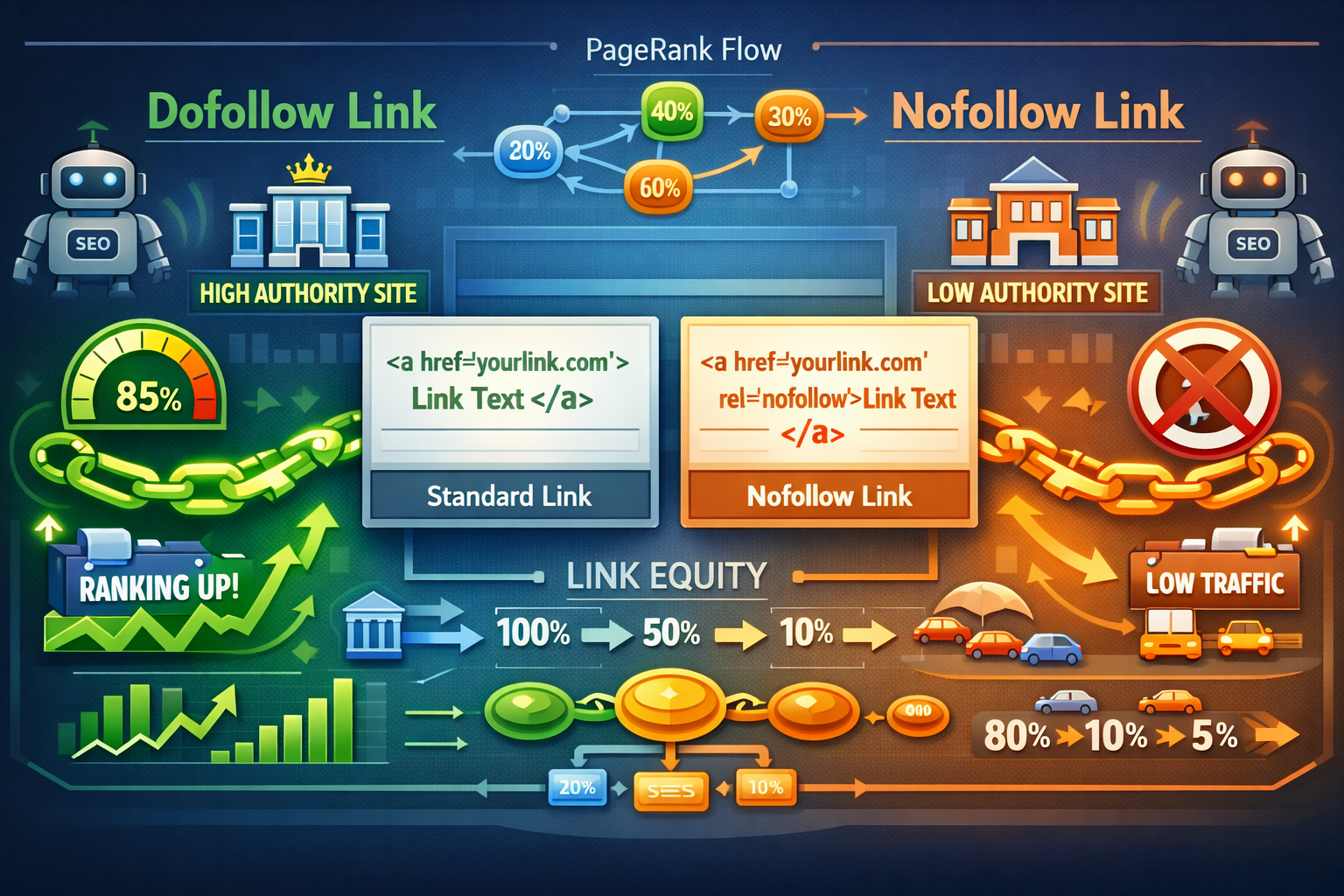
Dofollow links transfer ranking power (link equity) from one website to another and help improve search engine rankings, while nofollow links include an HTML attribute (rel=”nofollow”) that tells search engines not to pass this authority.[1][5] Dofollow is the default link type unless manually changed. Both types are valuable: dofollow links directly boost rankings and authority, whereas nofollow links drive traffic, increase brand visibility, and create opportunities for future dofollow links through natural engagement.[2][4] The ideal backlink profile contains 60-70% dofollow and 30-40% nofollow links to appear natural to search algorithms.[2]
What Are Dofollow and Nofollow Backlinks?
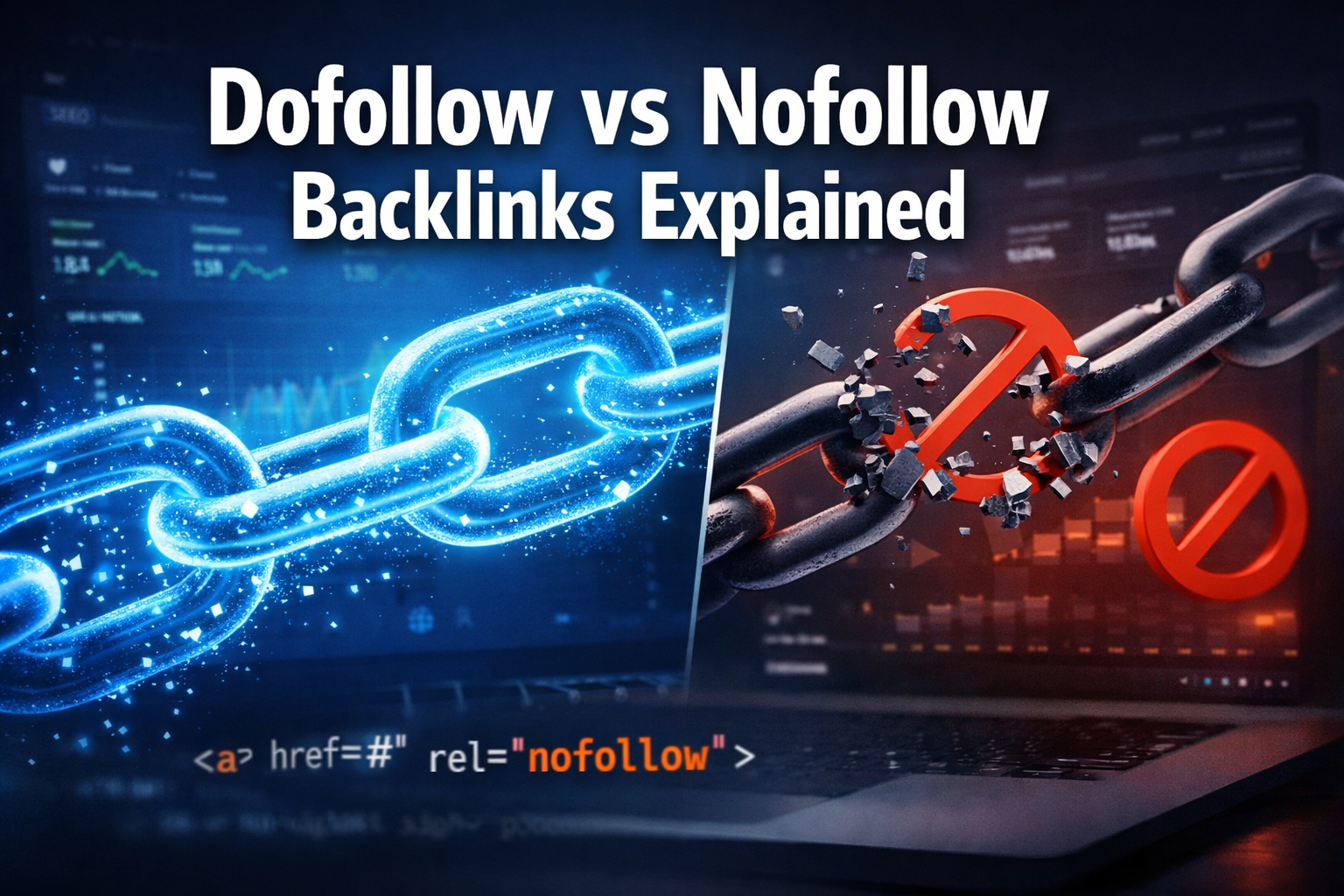
Dofollow links are standard HTML hyperlinks that allow search engines to follow them and pass ranking power (also called “link juice” or link equity) from the source page to the destination page.[1] Nofollow links contain a special HTML attribute—rel=”nofollow”—that instructs search engines to crawl the link but not transfer authority or ranking benefits.[5]
Technical difference in HTML code:
- Dofollow link:
<a href="https://example.com">anchor text</a> - Nofollow link:
<a href="https://example.com" rel="nofollow">anchor text</a>
Dofollow is the default state for all links on the web unless a webmaster manually adds the nofollow attribute.[5] This means when you create a link without any special attributes, it automatically passes ranking power to the linked page.
How Search Engines Treat Each Link Type
Search engines like Google crawl both dofollow and nofollow links, but they treat them differently in ranking algorithms.[1] Dofollow links receive full crawling priority and contribute to the destination page’s authority score, domain rating, and position in search engine results pages (SERPs). Nofollow links are followed with reduced priority or sometimes not at all, and they don’t directly influence rankings.[1]
Common mistake: Many website owners assume nofollow links have zero SEO value. In reality, they still contribute to traffic, brand mentions, and engagement metrics that indirectly support SEO performance.[4]
For more context on how search engines process different types of links, see our guide on Google Index vs Backlink Index.
Why Dofollow vs Nofollow Backlinks Explained Matters for SEO
The distinction between dofollow and nofollow backlinks directly affects your website’s search engine rankings, domain authority, and organic traffic potential. According to research from Backlinko, websites with a higher percentage of dofollow links tend to rank higher in Google search results.[3]
Key benefits of dofollow backlinks:
- Increased page authority: High-quality dofollow links from authoritative sites boost your domain’s credibility and trustworthiness in search algorithms
- Improved SERP rankings: Link equity transfer helps target pages rank higher for competitive keywords
- Better crawling and indexing: Search engines discover and index new content faster through dofollow link pathways
- Referral traffic: Users click through dofollow links just as readily as nofollow links, generating qualified visitors
Value of nofollow backlinks:
- Referral traffic from high-authority sources: Nofollow links from sites like Forbes (which applies nofollow to all external links) still drive significant qualified traffic[4]
- Brand awareness and exposure: Placements on relevant, high-authority domains increase brand visibility and mention opportunities
- Indirect SEO benefits: Traffic and engagement from nofollow links can lead to natural, earned dofollow links over time[2]
- Natural profile signaling: A mix of both link types indicates organic, legitimate link acquisition rather than manipulative practices
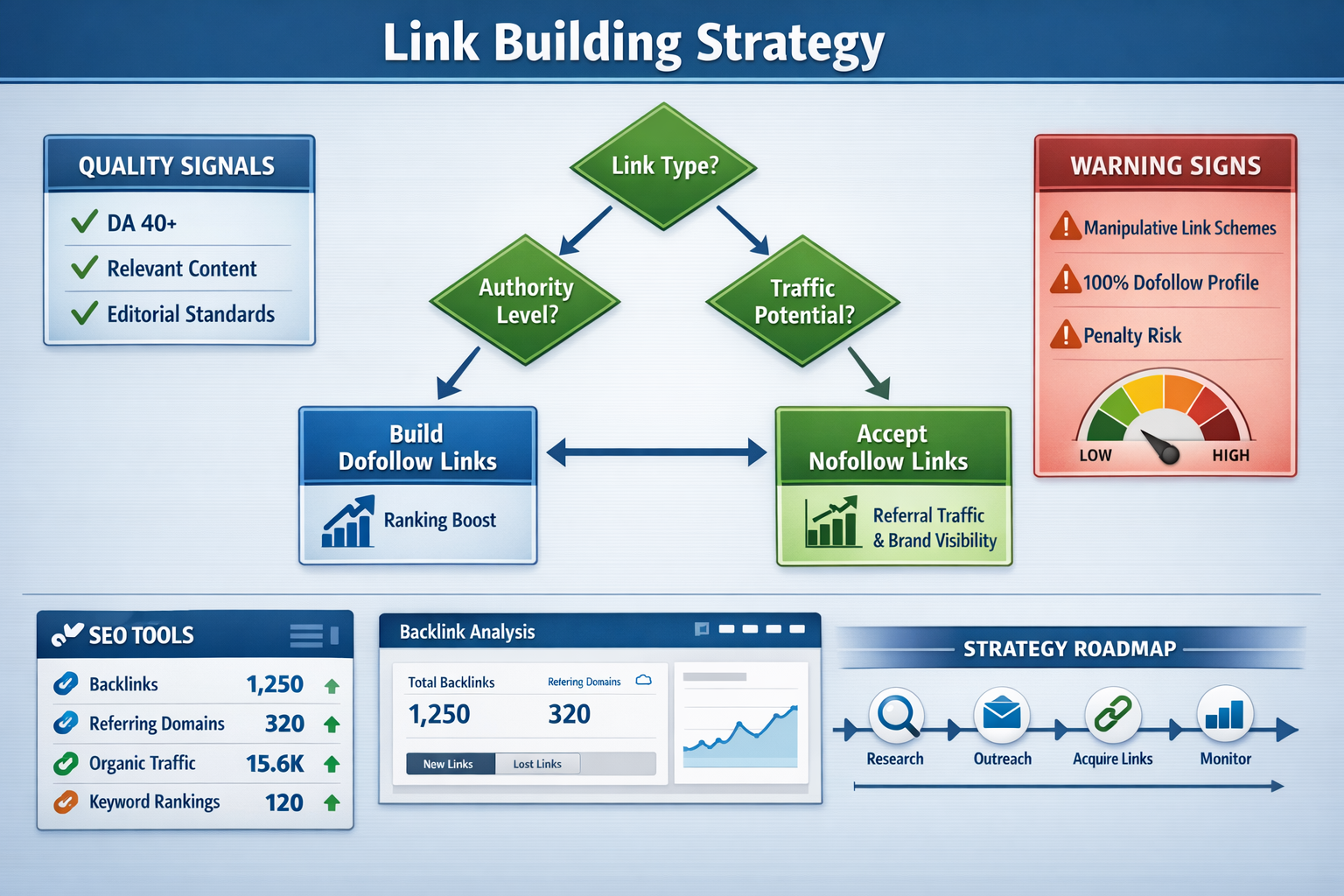
Choose dofollow links when your primary goal is ranking improvement and authority building. Accept nofollow links when they come from high-traffic, relevant sources that offer brand exposure and audience access.
What Is the Ideal Ratio of Dofollow vs Nofollow Backlinks Explained?
A healthy backlink profile should consist of approximately 60-70% dofollow links and 30-40% nofollow links.[2] This ratio signals organic growth patterns to search engines and reduces the risk of algorithmic penalties.
Some SEO professionals recommend a slightly wider range of 60-80% dofollow and 20-40% nofollow, with the nofollow portion typically coming from paid links, forums, directories, and social media platforms.[4]
Why Balance Matters
A backlink profile with 100% dofollow links appears manipulative and unnatural, potentially triggering algorithmic penalties from search engines.[1][2][4] Natural link acquisition always produces a mix of both types because:
- Social media platforms automatically apply nofollow to external links
- User-generated content sites (forums, comments) use nofollow for spam prevention
- Paid placements and sponsored content require nofollow per Google guidelines
- Some high-authority publishers apply nofollow as editorial policy
Decision rule: If your backlink profile shows more than 85% dofollow links, you may need to diversify with legitimate nofollow sources. If it’s below 50% dofollow, focus on earning editorial dofollow links through content quality and outreach.
Backlink Profile Health Analyzer
Where Nofollow Links Typically Come From
Understanding the natural sources of nofollow links helps you build a realistic backlink strategy:
- Social media platforms (Facebook, Twitter, LinkedIn, Instagram)
- User-generated content sites (Reddit, Quora, forums)
- Paid placements and sponsored content (required by Google guidelines)
- Blog comments (most blogs apply nofollow automatically)
- Press release distribution services
- Some high-authority publishers (Forbes, Medium) that apply blanket nofollow policies
How to Identify Dofollow vs Nofollow Links
Determining whether a backlink is dofollow or nofollow requires examining the HTML source code of the linking page. Most SEO professionals use browser extensions or specialized tools rather than manual inspection.
Manual method:
- Right-click on the link and select “Inspect” or “View Page Source”
- Look for the
<a>tag containing the link - Check for
rel="nofollow"attribute—if present, it’s nofollow; if absent, it’s dofollow
Automated methods:
- Browser extensions: NoFollow Simple, SEOquake, MozBar
- SEO tools: Ahrefs, SEMrush, Moz Link Explorer
- Backlink monitoring tools: These platforms automatically categorize your backlinks by type
For comprehensive backlink analysis and monitoring, explore professional backlink monitoring tools that provide detailed breakdowns of your link profile.
Common mistake: Assuming all links from social media or forums are worthless because they’re nofollow. These platforms often drive substantial referral traffic and brand exposure that leads to earned dofollow links elsewhere.
How to Build a Balanced Backlink Profile
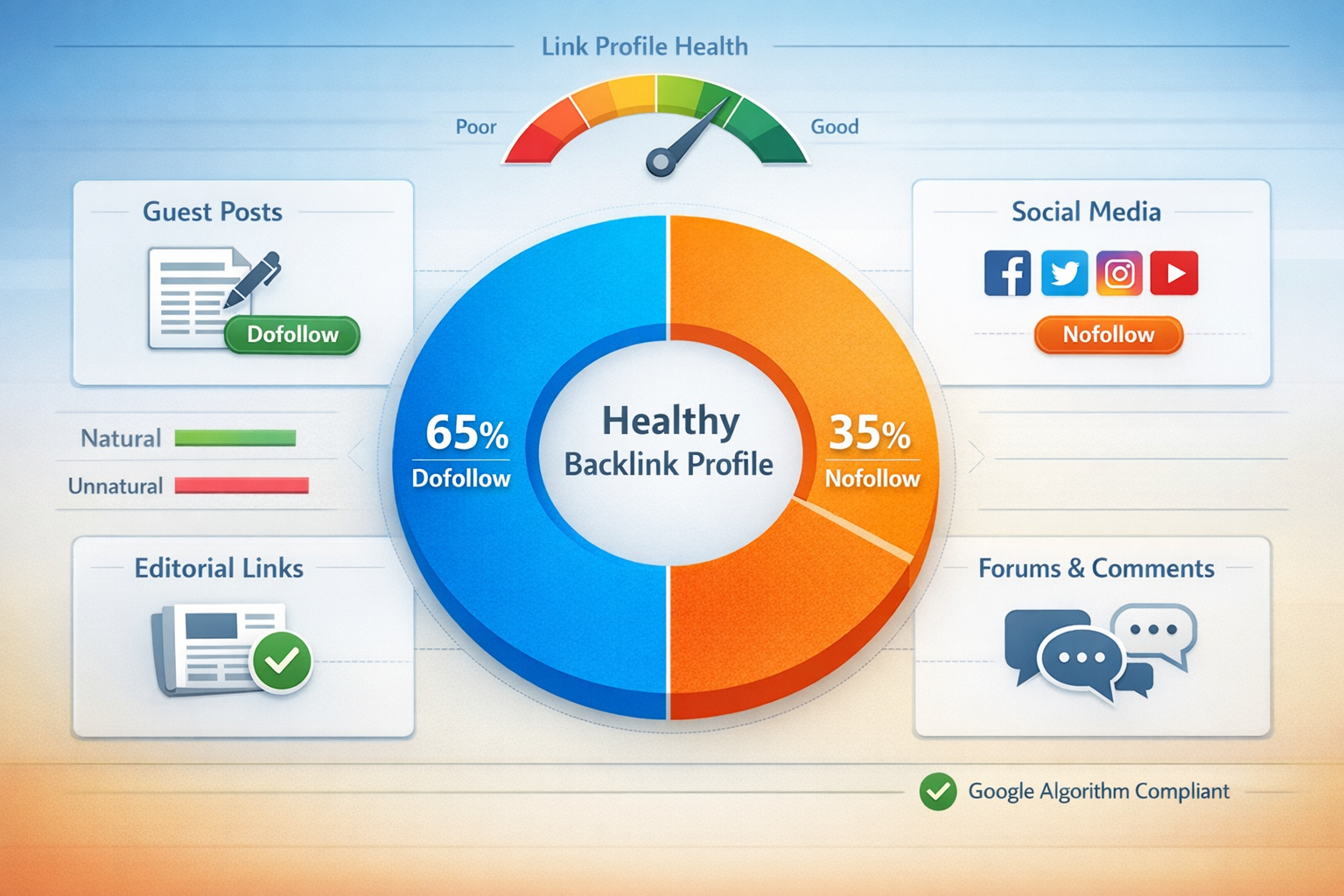
Creating a natural mix of dofollow and nofollow backlinks requires a strategic approach that prioritizes quality, relevance, and diversity. The goal is organic growth that search engines recognize as legitimate.
Strategic framework for balanced link building:
- Prioritize editorial dofollow links (60-70% of total effort)
- Create high-quality, linkable assets (original research, comprehensive guides, tools)
- Conduct strategic outreach to relevant, authoritative websites
- Pursue guest post opportunities on industry-leading blogs
- Build relationships with journalists and bloggers for natural mentions
- Accept valuable nofollow links (30-40% of total effort)
- Engage authentically on social media platforms
- Participate in relevant forums and Q&A sites (Reddit, Quora)
- Submit to quality industry directories
- Pursue press coverage even when outlets use nofollow
- Diversify anchor text and source types
- Mix branded, exact-match, partial-match, and generic anchor text
- Acquire links from various domain types (.com, .org, .edu, .gov)
- Build links from different content formats (articles, videos, infographics)
- Monitor and audit regularly
- Track your dofollow/nofollow ratio monthly
- Remove or disavow toxic or spammy backlinks
- Identify and replicate successful link acquisition patterns
Choose guest posting if: You want high-quality, contextual dofollow links from relevant industry websites. Choose social media and forum participation if you need brand awareness, community engagement, and traffic that leads to natural link earning.
For specialized link building strategies, explore options like EDU and GOV backlinks or multi-tier backlink packages that create natural link diversity.
Common Mistakes When Building Dofollow and Nofollow Backlinks
Even experienced SEO professionals make critical errors that undermine their backlink strategies. Avoiding these mistakes protects your rankings and accelerates growth.
Top mistakes to avoid:
- Obsessing over 100% dofollow links: This creates an unnatural profile that search engines flag as manipulative[1][2]
- Ignoring nofollow link opportunities: Missing valuable traffic and brand exposure from high-authority sources[4]
- Buying low-quality dofollow links: Purchasing links from link farms or PBNs triggers penalties and damages long-term rankings
- Neglecting link quality for quantity: One authoritative dofollow link from a relevant source outperforms 100 low-quality directory links
- Using over-optimized anchor text: Excessive exact-match anchors in dofollow links raise red flags
- Failing to diversify link sources: Acquiring all links from one type of site or platform appears unnatural
- Not monitoring your backlink profile: Failing to track ratio changes or identify toxic links allows problems to compound
Edge case: If you operate in a highly regulated industry (finance, healthcare, legal), you may naturally have more nofollow links because authoritative publishers in these sectors often apply strict nofollow policies. This is acceptable as long as you’re still earning quality dofollow links from industry-specific sources.
What Google Says About Dofollow vs Nofollow Links
Google’s official guidance on link attributes has evolved significantly, particularly with the introduction of new link attributes in 2019. Understanding these changes helps you build compliant, effective backlink strategies.
Current Google link attribute framework:
- rel=”nofollow”: General hint to not follow or pass credit
- rel=”sponsored”: Identifies paid or sponsored links (required for FTC compliance)
- rel=”ugc”: Marks user-generated content links (comments, forum posts)
In 2019, Google changed how it treats nofollow from a directive to a “hint,” meaning Google may choose to use nofollow links for crawling or indexing purposes in certain contexts.[6] However, nofollow links still don’t typically pass ranking credit.
Google’s requirements for paid links:
All paid, sponsored, or advertisement links must use rel=”sponsored” or rel=”nofollow” to avoid manual penalties. Selling or buying dofollow links without proper attribution violates Google’s Webmaster Guidelines and can result in severe ranking penalties.
Decision rule: Use rel=”sponsored” for any link you paid for or received compensation to place. Use rel=”ugc” for user-generated content sections. Use standard dofollow for editorial links you earned through content quality.
Advanced Strategies for Dofollow vs Nofollow Backlinks Explained
Once you understand the fundamentals, advanced tactics can accelerate your link building results while maintaining a natural profile.
Advanced link building strategies:
- Strategic nofollow link conversion
- Build relationships with site owners who link to you with nofollow
- Provide additional value (updated content, exclusive data) to earn dofollow upgrades
- Create co-marketing opportunities that justify editorial dofollow links
- Link reclamation campaigns
- Find unlinked brand mentions using Google Alerts or brand monitoring tools
- Request links be added to existing mentions (often dofollow)
- Convert image usage into credited backlinks
- Digital PR for authoritative links
- Create newsworthy content (original research, industry surveys)
- Pitch journalists and industry publications
- Accept initial nofollow coverage knowing it drives traffic that earns dofollow links
- Broken link building
- Identify broken links on authoritative sites in your niche
- Offer your relevant content as a replacement
- Typically earns editorial dofollow links
- Tiered link building
- Build high-quality tier-1 dofollow links to your money pages
- Support tier-1 links with tier-2 links (mix of dofollow and nofollow)
- Create natural link velocity and authority flow
For comprehensive link building campaigns, explore multi-tier backlink strategies that create natural link ecosystems.
Common mistake: Building tier-2 links too quickly or with low quality, which can harm rather than help your tier-1 links. Always prioritize quality and natural velocity at every tier.
Measuring the Impact of Your Backlink Profile
Tracking the right metrics helps you understand whether your dofollow and nofollow link strategy is working. Focus on metrics that correlate with business outcomes, not vanity numbers.
Essential metrics to monitor:
- Dofollow/nofollow ratio: Track monthly to maintain 60-70% dofollow range
- Domain authority/rating: Monitor increases from authoritative dofollow links
- Organic traffic growth: Measure traffic to pages with new backlinks
- Keyword ranking improvements: Track target keyword positions over time
- Referral traffic: Measure traffic from both dofollow and nofollow sources
- Link velocity: Monitor new link acquisition rate (avoid sudden spikes)
- Toxic link percentage: Identify and disavow harmful backlinks promptly
Recommended tools for tracking:
- Ahrefs Site Explorer (comprehensive backlink analysis)
- SEMrush Backlink Analytics (competitor comparison)
- Google Search Console (official Google link data)
- Moz Link Explorer (domain authority metrics)
Set up monthly reports that track these metrics and correlate backlink changes with ranking and traffic improvements. This data helps you identify which link building tactics deliver the best ROI.
For real-world examples of successful backlink strategies, review our backlink case studies that demonstrate measurable results.
Frequently Asked Questions
Do nofollow links help with SEO in 2026?
Yes, nofollow links still provide significant SEO value in 2026 through referral traffic, brand awareness, and indirect ranking benefits. While they don’t directly pass link equity, traffic and engagement from nofollow links can lead to natural dofollow links over time.[2][4]
What percentage of backlinks should be dofollow?
Aim for 60-70% dofollow backlinks and 30-40% nofollow backlinks to signal natural, organic link acquisition to search engines.[2] Profiles with more than 85% dofollow links may appear manipulative and risk algorithmic penalties.
Can I convert nofollow links to dofollow?
You can request that site owners change nofollow links to dofollow, but success depends on their editorial policies and your relationship with them. Provide additional value or updated content to justify the change. Never offer payment for this conversion, as it violates Google guidelines.
Are all social media links nofollow?
Most major social media platforms (Facebook, Twitter, LinkedIn, Instagram) automatically apply nofollow to external links. However, these links still drive valuable referral traffic and brand exposure that supports overall SEO performance.[4]
How do I check if a link is dofollow or nofollow?
Right-click the link and select “Inspect” to view the HTML code. If you see rel="nofollow" in the anchor tag, it’s nofollow. If the rel attribute is absent or contains other values, it’s dofollow. Browser extensions like NoFollow Simple automate this process.
Do dofollow links from low-authority sites help rankings?
Dofollow links from low-authority but relevant sites provide minimal ranking benefit and may even harm your profile if they come from spammy sources. Prioritize quality over quantity—one link from an authoritative site outperforms dozens of low-quality links.
Should I disavow nofollow links?
Generally no. Nofollow links don’t pass negative signals, so there’s no need to disavow them. Focus your disavow efforts on toxic dofollow links from spam sites, link farms, or irrelevant sources that could trigger penalties.
How long does it take for dofollow backlinks to impact rankings?
Most dofollow backlinks show ranking impact within 4-12 weeks, depending on crawl frequency, link authority, and competition level. High-authority links from frequently crawled sites show faster results than links from less prominent sources.
Can too many dofollow links hurt my SEO?
Yes, if they come from low-quality sources or appear unnatural (100% dofollow, over-optimized anchors, sudden spikes). Focus on earning high-quality dofollow links gradually while maintaining a natural ratio with nofollow links.[1][2]
What’s the difference between nofollow and sponsored links?
Both prevent link equity transfer, but rel=”sponsored” specifically identifies paid or compensated links, while rel=”nofollow” is a general directive. Google requires sponsored links to use rel=”sponsored” or rel=”nofollow” for compliance.
Are dofollow backlinks from guest posts still effective?
Yes, when done correctly. Guest posts on relevant, authoritative sites with editorial standards remain highly effective for earning quality dofollow links. Avoid low-quality guest post networks or sites that accept anyone without editorial review.
How many backlinks do I need to rank on page one?
There’s no fixed number—ranking depends on backlink quality, relevance, competition, content quality, and many other factors. Focus on earning authoritative, relevant backlinks rather than hitting arbitrary quantity targets.
Conclusion
Understanding dofollow vs nofollow backlinks explained is fundamental to building an effective SEO strategy in 2026. Dofollow links pass ranking power and directly improve search engine positions, while nofollow links drive traffic, brand awareness, and create opportunities for future link earning. Both types play essential roles in a healthy backlink profile.
The key to sustainable SEO success is maintaining a natural balance of approximately 60-70% dofollow and 30-40% nofollow links.[2] This ratio signals organic growth to search engines and minimizes penalty risk. Prioritize quality over quantity for both link types—one authoritative dofollow link from a relevant source delivers more value than dozens of low-quality directory listings.
Actionable next steps:
- Audit your current backlink profile using tools like Ahrefs or SEMrush to determine your dofollow/nofollow ratio
- Identify gaps in your link profile and create a strategy to reach the ideal 60-70% dofollow range
- Focus on quality link building through content creation, strategic outreach, and relationship building
- Accept valuable nofollow opportunities from high-traffic, authoritative sources that drive brand awareness
- Monitor your profile monthly to track ratio changes, identify toxic links, and measure ranking improvements
- Diversify your link sources across different domain types, content formats, and acquisition methods
Remember that link building is a long-term investment. Consistent effort focused on earning high-quality, relevant backlinks from authoritative sources will deliver sustainable ranking improvements and organic traffic growth. Stay informed about current SEO best practices and adapt your strategy as search algorithms evolve.
References
[1] Dofollow Vs Nofollow Backlinks Understanding The Key Differences And Their Impact On Seo – https://vocal.media/journal/dofollow-vs-nofollow-backlinks-understanding-the-key-differences-and-their-impact-on-seo
[2] Definitive Guide Link Building 2026 – https://almcorp.com/blog/definitive-guide-link-building-2026/
[3] Understanding Dofollow Vs Nofollow Links – https://ranklytics.ai/understanding-dofollow-vs-nofollow-links/
[4] Dofollow Vs Nofollow Links – https://solvid.co.uk/dofollow-vs-nofollow-links/
[5] Dofollow Vs Nofollow Links Whats The Difference – https://www.ematicsolutions.com/dofollow-vs-nofollow-links-whats-the-difference/
[6] Dofollow Vs Nofollow Do Nofollow Links Still Matter In 2026 – https://mylinkstatus.com/blog/dofollow-vs-nofollow-do-nofollow-links-still-matter-in-2026/
Tags
dofollow backlinks, nofollow backlinks, link building, SEO strategy, backlink profile, link equity, search engine optimization, Google rankings, link attributes, backlink ratio, digital marketing, SEO best practices