Last updated: February 27, 2026
Key Takeaways
- Contextual backlinks are hyperlinks embedded within the main body content of a webpage, not in sidebars, footers, or author bios—this placement signals editorial endorsement to search engines
- Topical relevance matters more than link quantity—links from sites covering similar topics pass significantly more SEO value than unrelated sources
- Natural anchor text and editorial oversight are essential for sustainable contextual link strategies in 2026
- Contextual backlinks improve five core metrics: domain authority, organic traffic, search visibility, brand credibility, and ranking potential
- Earned contextual links outperform purchased links for long-term SEO success and reduced penalty risk
- User experience benefits include higher dwell time and reduced bounce rates when links guide readers to genuinely helpful resources
- Modern strategies extend beyond traditional webpages to Maps, videos, and voice search experiences
- Three-tier niche relevance determines link value: same-niche (maximum), related-niche (significant), and unrelated-but-contextual (moderate)
Quick Answer
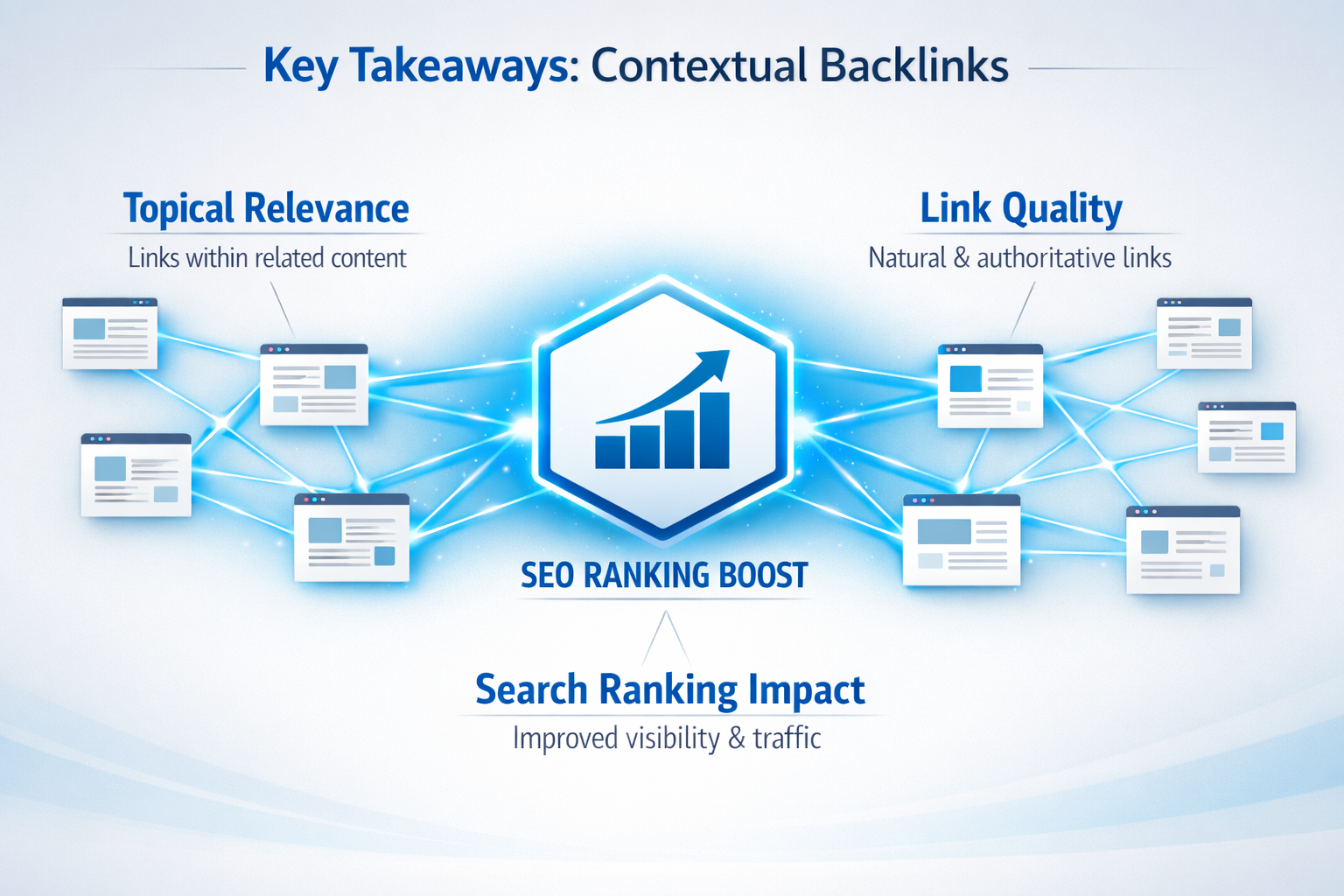
A contextual backlink is a hyperlink placed within the main body content of a webpage—specifically within paragraphs and narrative text—rather than in sidebars, footers, or other peripheral areas[1][2]. This placement signals to search engines that the link represents an editorial endorsement based on topical relevance rather than promotional tactics[3]. Contextual backlinks are valued higher by search algorithms because they appear naturally within content discussing related topics, indicating genuine value for readers rather than SEO manipulation[4].
Understanding What Is a Contextual Backlink
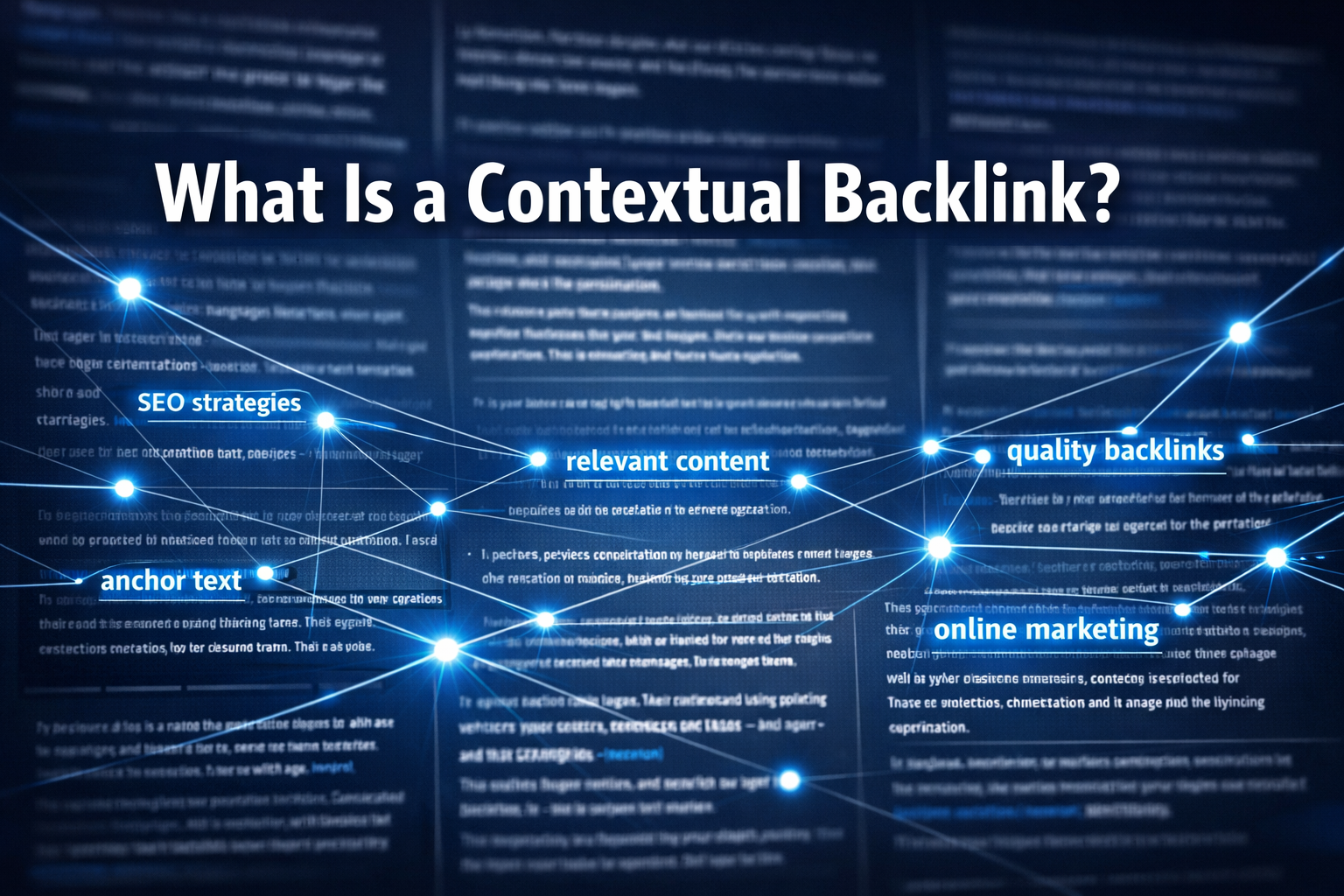
A contextual backlink is a hyperlink embedded within the main editorial content of a webpage, surrounded by relevant text that provides context about why the link exists[1][2]. The defining characteristic is placement within the natural flow of content rather than isolated in navigation elements, sidebars, or footers.
Search engines evaluate contextual backlinks differently than other link types because of three key factors:
Placement signals editorial intent. When a link appears within the main content area, it suggests the site owner made a deliberate editorial decision to reference that resource as valuable to readers[3]. This contrasts with automated sidebar widgets or footer links that appear site-wide regardless of content relevance.
Surrounding text provides semantic context. The paragraphs around a contextual backlink help search algorithms understand the relationship between the linking page and the destination page[4]. If a finance blog discusses retirement planning and links to a specific investment strategy guide, the surrounding text about retirement goals and risk tolerance reinforces the topical connection.
Reader behavior validates link quality. Contextual backlinks typically generate higher click-through rates and longer dwell times on destination pages because readers encounter them while actively engaged with related content[3]. This user behavior provides additional quality signals to search algorithms.
How Contextual Backlinks Differ from Other Link Types
| Link Type | Placement | SEO Value | Primary Purpose |
|---|---|---|---|
| Contextual Backlink | Main body content within paragraphs | High – passes maximum link equity | Editorial endorsement and reader resource |
| Sidebar Link | Widget or navigation in sidebar | Low to Medium – often ignored by algorithms | Site navigation or promotion |
| Footer Link | Site-wide footer area | Low – minimal SEO value | Legal pages, site structure |
| Author Bio Link | Author byline or bio section | Medium – limited contextual relevance | Author attribution |
| Comment Link | User-generated comment sections | Very Low – often nofollow | User engagement |
Choose contextual backlinks when you want to pass significant SEO value and genuinely help readers find related resources. Avoid forcing contextual links when the connection feels unnatural—this can trigger algorithmic penalties.
Why Contextual Backlinks Matter for SEO in 2026
Contextual backlinks deliver measurable improvements across five core SEO metrics: domain authority, organic traffic, search visibility, brand credibility, and ranking potential[1]. These benefits stem from how search algorithms interpret editorial endorsements within relevant content.
The Five Core Benefits
1. Increased Domain and Page Authority
When authoritative sites link to your content from within their main editorial content, they transfer a portion of their trust signals to your domain[1]. This authority transfer is significantly stronger for contextual placements than sidebar or footer links because algorithms weight editorial decisions more heavily.
2. Higher Organic Traffic
Contextual backlinks from high-traffic sites can drive direct referral traffic while simultaneously improving your search rankings[1]. The dual benefit creates a compounding effect—better rankings generate more organic visits, while referral traffic signals content quality to search engines.
3. Improved Search Visibility
Pages with strong contextual backlink profiles rank for a broader range of related keywords[3]. The topical context surrounding each link helps search algorithms understand the full scope of topics your content addresses, expanding your visibility beyond primary target keywords.
4. Enhanced Brand Credibility
Being referenced within authoritative content positions your brand as a trusted resource within your industry[1]. This credibility extends beyond search rankings to influence reader perception and conversion rates.
5. Better User Experience Metrics
Contextual backlinks boost dwell time and reduce pogo-sticking (users leaving and returning to search results) by guiding readers to genuinely helpful resources[3]. These user-centric metrics have become increasingly important ranking factors as search algorithms prioritize user satisfaction.
Common Mistake: Prioritizing Quantity Over Relevance
Many site owners pursue high volumes of contextual backlinks without evaluating topical alignment. A single contextual link from a highly relevant, authoritative site in your niche typically provides more SEO value than dozens of links from unrelated sources[4]. Focus on earning links from sites that cover similar topics and serve similar audiences rather than chasing raw link counts.
How Topical Relevance Determines Contextual Backlink Quality
Google evaluates contextual links based on the similarity between linking and linked sites across business category, niche focus, and specific topic coverage[4]. This topical alignment operates across multiple dimensions and determines how much SEO value each link passes.
The Three Tiers of Niche Relevance
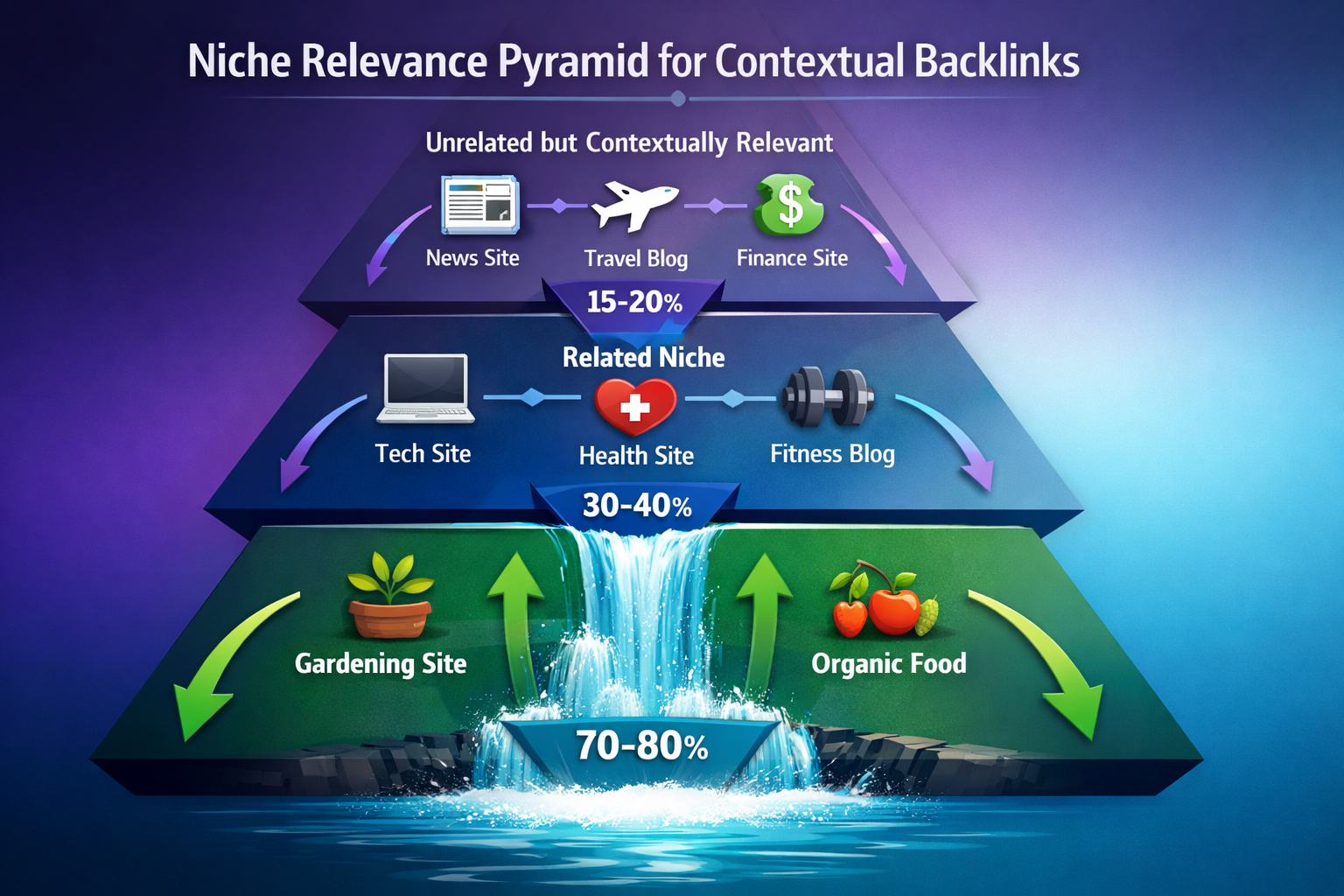
Same-Niche Links (Maximum Value)
Links from sites covering the exact same topic area pass the most link equity[4]. For example, a contextual backlink from a digital marketing blog to another digital marketing resource about SEO strategies represents perfect niche alignment. These links signal strong editorial endorsement because the linking site vouches for content directly relevant to their own audience.
Related-Niche Links (Significant Value)
Links from sites in adjacent or complementary niches still provide substantial SEO benefits[4]. A contextual link from a small business blog to an email marketing guide represents related-niche alignment—both serve overlapping audiences even though they focus on different aspects of business growth.
Unrelated-but-Contextual Links (Moderate Value)
Even links from seemingly unrelated niches can pass value when the specific content context creates relevance[4]. A travel blog linking to a photography tutorial about landscape composition creates contextual relevance through the specific topic (travel photography) even though the sites operate in different primary niches.
Evaluating Topical Alignment
Before pursuing or accepting a contextual backlink opportunity, assess alignment across these dimensions:
- Primary audience overlap – Do both sites serve similar reader demographics or professional roles?
- Topic proximity – How closely related are the specific subjects being discussed?
- Content intent – Do both pieces serve similar reader goals (education, comparison, implementation)?
- Semantic connection – Do the surrounding paragraphs naturally lead readers to the linked resource?
Choose same-niche opportunities when available, but don’t dismiss related-niche or contextually-relevant options. The specific context and editorial quality matter more than rigid niche categorization.
For deeper insights into how search engines evaluate different types of backlinks, see our guide on Google Index vs Backlink Index.
What Makes Anchor Text Effective in Contextual Backlinks
Effective contextual backlinks use anchor text that reads naturally within paragraphs and describes the linked content rather than forcing exact-match keywords[3]. Current best practices in 2026 emphasize diverse, long-tail phrasing that balances SEO value with reader experience.
The Four Anchor Text Categories
Branded Anchors
These use your company or website name as the clickable text. Example: “According to LinkinTech, contextual backlinks remain the most valuable link type.”
- Use when: Building brand recognition or linking to homepage/company pages
- Percentage target: 30-40% of total anchor text profile
Partial-Match Anchors
These include your target keyword plus additional descriptive words. Example: “Learn more in this comprehensive contextual backlink guide.”
- Use when: You want keyword relevance without over-optimization
- Percentage target: 25-35% of total anchor text profile
Natural/Generic Anchors
These use common phrases that don’t include target keywords. Example: “Click here to see the full strategy” or “Read more about link building techniques.”
- Use when: Maintaining natural link profiles and avoiding over-optimization
- Percentage target: 20-30% of total anchor text profile
Exact-Match Anchors
These use your exact target keyword as anchor text. Example: “contextual backlinks improve search rankings.”
- Use when: Sparingly and only when it reads naturally
- Percentage target: 5-15% of total anchor text profile (avoid exceeding this)
Anchor Text Distribution Strategy
Mix all four categories throughout your backlink profile to create a natural pattern that avoids algorithmic penalties. Over-reliance on exact-match anchors was a common black hat tactic that modern algorithms actively penalize[4].
Edge case: If you’re recovering from a previous penalty or have an unnaturally high percentage of exact-match anchors, prioritize branded and natural anchors in new link acquisition to rebalance your profile.
How to Earn High-Quality Contextual Backlinks
The most authoritative contextual backlinks are earned organically when sites naturally mention and link to your content because it provides genuine value to their readers[3]. While paid placements exist, earned links provide higher long-term value and reduced penalty risk.
Proven Earning Strategies
1. Create Link-Worthy Content (Skyscraper Technique)
Identify popular content in your niche that has attracted many backlinks, then create a significantly better version that provides more value[3]. Reach out to sites linking to the original content and suggest your superior resource as an alternative or additional reference.
Steps:
- Research top-performing content using backlink analysis tools
- Identify gaps, outdated information, or areas for improvement
- Create content that’s more comprehensive, current, or better formatted
- Contact sites linking to the original with a brief, personalized pitch
- Focus on how your content benefits their readers specifically
2. Broken Link Building
Find broken links on authoritative sites in your niche, then offer your relevant content as a replacement[3]. This provides value to the linking site by helping them fix user experience issues while earning you a contextual backlink.
Steps:
- Use tools to identify broken links on target sites in your niche
- Create or identify existing content that matches the original broken link topic
- Contact the site owner with a helpful notification about the broken link
- Suggest your content as a replacement only if it’s genuinely relevant
- Provide the exact page URL where the broken link appears
3. Original Research and Data
Publish original studies, surveys, or data analysis that other sites will naturally reference when discussing your topic[3]. Data-driven content attracts contextual backlinks because journalists, bloggers, and researchers need credible sources to cite.
Examples:
- Industry surveys with unique insights
- Original data analysis revealing new trends
- Case studies demonstrating specific strategies
- Benchmark reports comparing industry standards
4. Strategic Guest Posting
Contribute high-quality articles to authoritative sites in your niche, including natural contextual links back to relevant resources on your site[3]. Focus on providing genuine value to the host site’s audience rather than link manipulation.
For professional guest posting opportunities, explore our guest post backlink services.
5. Digital PR and Newsworthy Content
Create content tied to current events, industry news, or trending topics that journalists and news sites will reference[3]. Timely, newsworthy content naturally attracts contextual backlinks from media coverage.
Common Mistake: Neglecting Editorial Oversight
Current best practice in 2026 requires editorial oversight for all contextual placements[3]. Each link placement should undergo review for relevance and usefulness, with documented rationale for why the link serves readers. This governance framework protects against algorithmic penalties and ensures sustainable link building.
To see real-world results from strategic backlink campaigns, check out our backlink case study.
Contextual Backlinks vs. Other Link Building Strategies
Contextual backlinks represent one component of a comprehensive link building strategy that should include multiple tactics based on your specific goals and resources. Understanding when to prioritize contextual links versus other approaches helps optimize your SEO investment.
Strategic Comparison
Contextual Backlinks vs. Directory Submissions
Directory links provide basic citations and local SEO signals but lack the editorial endorsement and topical relevance of contextual backlinks[1]. Choose directory submissions for local SEO and basic online presence, but prioritize contextual backlinks for domain authority and organic rankings.
Contextual Backlinks vs. Social Media Links
Social media links typically include nofollow attributes and provide minimal direct SEO value, but they drive traffic and social signals[1]. Use social media for audience engagement and content distribution, while relying on contextual backlinks for search ranking improvements.
Contextual Backlinks vs. Forum/Comment Links
Forum and blog comment links are usually nofollow and carry low authority due to spam abuse[1]. Avoid these for SEO purposes and focus energy on earning editorial contextual placements instead.
Contextual Backlinks vs. Resource Page Links
Resource page links provide moderate SEO value when your content genuinely fits the resource compilation[1]. Pursue resource page opportunities as a supplement to contextual backlinks, particularly for evergreen educational content.
Multi-Tier Link Building
Advanced strategies in 2026 combine contextual backlinks with supporting link tiers to amplify SEO impact[3]. A multi-tier approach builds links to your contextual backlinks, increasing their authority and the value they pass to your site.
Tier 1: High-quality contextual backlinks pointing directly to your target pages
Tier 2: Supporting links (Web 2.0 properties, social profiles, article directories) pointing to your Tier 1 backlinks
Tier 3: Additional supporting links pointing to Tier 2 properties
This pyramid structure distributes link equity while maintaining natural link profiles. For implementation, consider our multi-tier backlink packages.
Measuring Contextual Backlink Performance
Track five key metrics to evaluate whether your contextual backlinks are delivering expected SEO improvements: referring domains, organic traffic growth, keyword ranking changes, domain authority progression, and referral traffic patterns. Regular monitoring helps identify which link sources provide the most value.
Essential Metrics and Tools
Referring Domain Growth
Monitor the number of unique domains linking to your site over time. Quality matters more than quantity, but steady growth in relevant referring domains indicates successful link acquisition.
Organic Traffic Trends
Analyze organic search traffic to pages that have gained contextual backlinks. Significant traffic increases within 4-8 weeks of link acquisition suggest the links are passing value effectively.
Keyword Ranking Improvements
Track rankings for target keywords on pages receiving contextual backlinks. Look for gradual improvements in position over 2-3 months as search engines discover and evaluate new links.
Domain Authority Metrics
While domain authority scores from tools like Moz or Ahrefs aren’t direct ranking factors, they provide useful benchmarks for comparing link profile strength over time.
Referral Traffic Quality
Examine traffic coming directly through contextual backlinks. High-quality placements should generate engaged visitors with reasonable bounce rates and time-on-site metrics.
Setting Realistic Expectations
Contextual backlinks typically take 4-12 weeks to show measurable SEO impact as search engines discover, crawl, and incorporate new links into their algorithms[3]. Expect gradual improvements rather than overnight ranking jumps.
Edge case: If you see no improvement after 3 months, audit your backlink quality. Links from low-authority sites, irrelevant niches, or pages with poor topical alignment may provide minimal value regardless of contextual placement.
For broader SEO strategies and resources, visit our SEO category.
Advanced Contextual Backlink Strategies for 2026
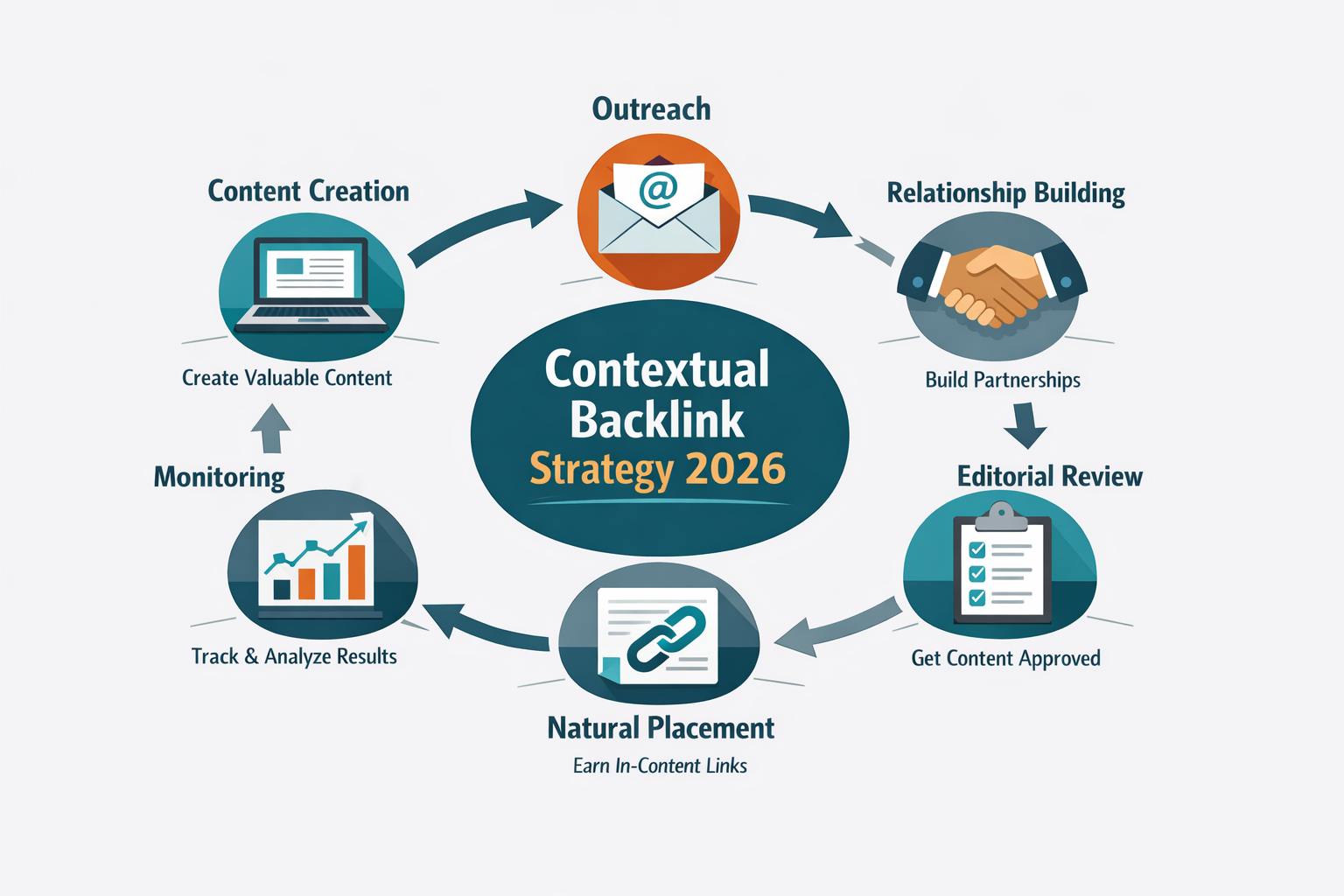
Modern contextual backlink strategies extend beyond traditional webpages to Maps, videos, voice search optimization, and multi-surface content experiences[3]. These advanced approaches require consistent semantic meaning and governance across all platforms where your content appears.
Cross-Surface Momentum
Maps Integration
Contextual backlinks from local business directories and geo-targeted content can improve Google Maps rankings for location-based searches[3]. Ensure your business citations include contextual mentions within relevant local content rather than just basic directory listings.
Video Backlinks
YouTube video descriptions and embedded video content on authoritative sites create contextual backlink opportunities[3]. Include relevant links in video descriptions with surrounding text that explains why viewers should visit the linked resource.
For video-specific link building, explore our YouTube video backlink service.
Voice Search Optimization
As voice assistants increasingly cite sources for spoken answers, contextual backlinks from featured snippet content and authoritative reference sites improve voice search visibility[3]. Focus on question-based content that directly answers common voice queries.
Editorial Governance Framework
Implement these governance practices for sustainable contextual link building in 2026[3]:
- Document link rationale – Maintain records explaining why each contextual link serves readers
- Regular quality audits – Review existing backlinks quarterly to identify and disavow low-quality links
- Relationship tracking – Monitor ongoing relationships with linking sites to identify new opportunities
- Competitive analysis – Study competitor backlink profiles to discover untapped link sources
- Penalty prevention – Ensure all link acquisition follows current search engine guidelines
Avoiding Black Hat Tactics
Contextual link quality standards were implemented to combat black hat SEO tactics that exploited PageRank algorithms through irrelevant link farms[4]. Modern algorithms actively penalize these manipulative practices:
Avoid:
- Private blog networks (PBNs) designed solely for link manipulation
- Automated link insertion tools that ignore topical relevance
- Excessive reciprocal linking schemes
- Paid links without proper nofollow attributes when required
- Contextual link stuffing with unnatural anchor text density
Instead, focus on genuine editorial relationships, content quality that naturally attracts links, and transparent practices that prioritize user value over algorithmic manipulation.
Frequently Asked Questions
What is the difference between a contextual backlink and a regular backlink?
A contextual backlink appears within the main body content of a webpage, surrounded by relevant text that provides context. Regular backlinks can appear anywhere on a page, including sidebars, footers, or navigation menus. Contextual placement signals editorial endorsement and typically passes more SEO value[1][2].
How many contextual backlinks do I need to rank higher?
There’s no fixed number—quality and relevance matter more than quantity. A single contextual backlink from a highly authoritative, topically relevant site can provide more SEO value than dozens of links from low-quality or irrelevant sources[4]. Focus on earning links from sites that serve similar audiences and cover related topics.
Are contextual backlinks better than nofollow links?
Contextual backlinks are typically dofollow links that pass SEO value, while nofollow links tell search engines not to pass authority. However, a contextual nofollow link from a highly relevant, authoritative site still provides value through referral traffic and brand exposure. The ideal backlink profile includes a natural mix of both[3].
How long does it take for contextual backlinks to improve rankings?
Most contextual backlinks show measurable SEO impact within 4-12 weeks as search engines discover, crawl, and evaluate the new links. Expect gradual ranking improvements rather than immediate jumps. Factors like the linking site’s crawl frequency and your own site’s authority influence the timeline[3].
Can I buy contextual backlinks safely?
Purchasing contextual backlinks carries risk if not done transparently. Search engines penalize manipulative paid link schemes that don’t disclose sponsorship. If you purchase placements, ensure they’re clearly marked as sponsored when required and focus on genuinely relevant, high-quality sites. Earned links provide better long-term value and lower penalty risk[3].
What makes anchor text natural in a contextual backlink?
Natural anchor text reads smoothly within the surrounding paragraph and describes the linked content rather than forcing exact-match keywords. Mix branded anchors, partial-match phrases, generic terms like “learn more,” and occasional exact-match keywords to create a diverse, natural-looking anchor text profile[3].
Do contextual backlinks from unrelated niches help SEO?
Yes, when the specific content context creates relevance. A link from an unrelated niche can still pass value if the surrounding text naturally leads readers to your content and serves a genuine informational purpose. However, same-niche and related-niche links typically provide stronger SEO benefits[4].
How do I find contextual backlink opportunities?
Use backlink analysis tools to study competitor link profiles and identify sites linking to similar content. Look for broken links on authoritative sites in your niche. Create original research or comprehensive resources that naturally attract citations. Build relationships with industry publications through guest posting and digital PR[3].
What’s the ideal anchor text distribution for contextual backlinks?
Aim for approximately 30-40% branded anchors, 25-35% partial-match anchors, 20-30% natural/generic anchors, and only 5-15% exact-match anchors. This distribution creates a natural-looking profile that avoids over-optimization penalties while still providing keyword relevance signals[3].
Can I remove bad contextual backlinks?
You can’t directly remove backlinks from other sites, but you can request removal by contacting site owners or use Google’s Disavow Tool to tell search engines to ignore specific links. Focus disavow efforts on clearly spammy or manipulative links rather than simply low-quality placements[3].
Do contextual backlinks work for local SEO?
Yes, contextual backlinks from local business directories, regional news sites, and geo-targeted content improve local search rankings. Ensure citations include contextual mentions within relevant local content rather than just basic directory listings. Combine with Google Business Profile optimization for best results[3].
How do contextual backlinks affect domain authority?
Contextual backlinks from high-authority sites pass trust signals that can improve your domain authority metrics over time. The effect is cumulative—consistent acquisition of quality contextual links from relevant, authoritative sources gradually strengthens your overall domain authority and ranking potential[1].
Conclusion
Contextual backlinks remain the most valuable link type for SEO in 2026 because they signal genuine editorial endorsement based on topical relevance. Unlike peripheral links in sidebars or footers, contextual placements within main body content demonstrate that authoritative sites trust your content enough to reference it for their own readers.
The key principles for success are clear: prioritize topical relevance over raw link quantity, use natural anchor text that serves readers rather than just search algorithms, and focus on earning links through content quality rather than manipulative tactics. Same-niche contextual backlinks provide maximum SEO value, but related-niche and contextually-relevant links from unrelated sites still contribute meaningfully when placement is genuinely helpful.
Actionable Next Steps
Start with content quality. Before pursuing contextual backlinks, ensure your site offers genuinely valuable resources worth linking to. Comprehensive guides, original research, and practical tools naturally attract editorial mentions.
Identify link-worthy opportunities. Use backlink analysis tools to study where competitors earn contextual links. Look for broken links on authoritative sites in your niche. Create content that fills gaps in existing resources.
Build genuine relationships. Reach out to site owners and editors with personalized pitches that focus on how your content benefits their readers. Contribute guest posts that provide real value rather than just link opportunities.
Implement editorial governance. Document the rationale for each contextual link placement. Conduct quarterly audits to ensure your backlink profile remains natural and penalty-free. Track performance metrics to identify which link sources deliver the best results.
Diversify your approach. Combine contextual backlinks with supporting link tiers, local citations, and multi-surface optimization across Maps, video, and voice search. A comprehensive strategy delivers more sustainable results than any single tactic.
The sites that succeed with contextual backlinks in 2026 are those that genuinely prioritize reader value over algorithmic manipulation. Focus on creating content worth citing, building relationships with authoritative sites in your niche, and maintaining natural link profiles that demonstrate real editorial endorsement. This approach not only improves search rankings but also builds brand credibility and drives engaged traffic that converts.
For comprehensive backlink solutions tailored to your specific needs, explore our powerful backlink packages or browse our full SEO services.
🔗 Contextual Backlink Quality Evaluator
Assess the quality of your backlink opportunities in seconds
References
[1] Contextual Links – https://legiit.com/blog/contextual-links
[2] What Is Contextual Backlinks – https://iqraseo.com/what-is-contextual-backlinks/
[3] 129 Contextual Backlinks Comprehensive Guide – https://indexjump.com/blog/129-contextual-backlinks-comprehensive-guide
[4] Contextual Link Building – https://www.stanventures.com/blog/contextual-link-building/
[5] Definitive Guide Link Building 2026 – https://almcorp.com/blog/definitive-guide-link-building-2026/
[6] What You Should Know About Backlink Acquisition In 2026 – https://www.linkbuildinghq.com/blog/what-you-should-know-about-backlink-acquisition-in-2026/
[7] Link Building Strategies 2026 – https://netclubbed.com/blog/link-building-strategies-2026/
Tags:
contextual backlinks, link building, SEO strategy, backlink quality, anchor text optimization, topical relevance, domain authority, organic traffic, editorial links, search engine optimization, link placement, niche relevance